

A Mind-Blowing Look at How Our Brains Create Our Reality. With Renowned Neuroscientist Lisa Feldman Barrett
Our brains run the show and determine how we relate to the world. Discoveries from the front lines of neuroscience show our brains are creators (as opposed to spectators) of reality and also creator of our emotions. Don’t miss this enlightening talk with Lisa Feldman Barrett, one of the world’s most cited scientists for her groundbreaking research in psychology and neuroscience.

What Does the Work of The Future Look Like? With MIT Professor David Autor
Why will tech and automation never lead to the demise of human work? What qualifies as “good” work? What role will robots and AI play in the fast-approaching future? David Autor, MIT professor and co-chair of the MIT Task Force on The Work of The Future, provides answers in this riveting and enlightening conversation.

The Person You Mean To Be and A More Just Future with Social Scientist Dolly Chugh
It’s counter-intuitive but true: letting go of being a good person is key to becoming a better one, and often times it starts with acknowledging our unconscious bias. Social scientist and best-selling author Dolly Chugh offers phenomenal insight that can benefit us both at home and in the workplace.

Is This Time Different? Eight Centuries of Financial Folly with Famed Economist Ken Rogoff
Harvard economics professor and former IMF Chief Economist Ken Rogoff is one of the world’s preeminent economic thinkers. Here he brilliantly dissects today’s U.S. economy and bluntly explains what must happen to tame inflation and sustain growth – and the major role China may play.
He is the co-author of This Time Is Different: Eight Centuries of Financial Folly.
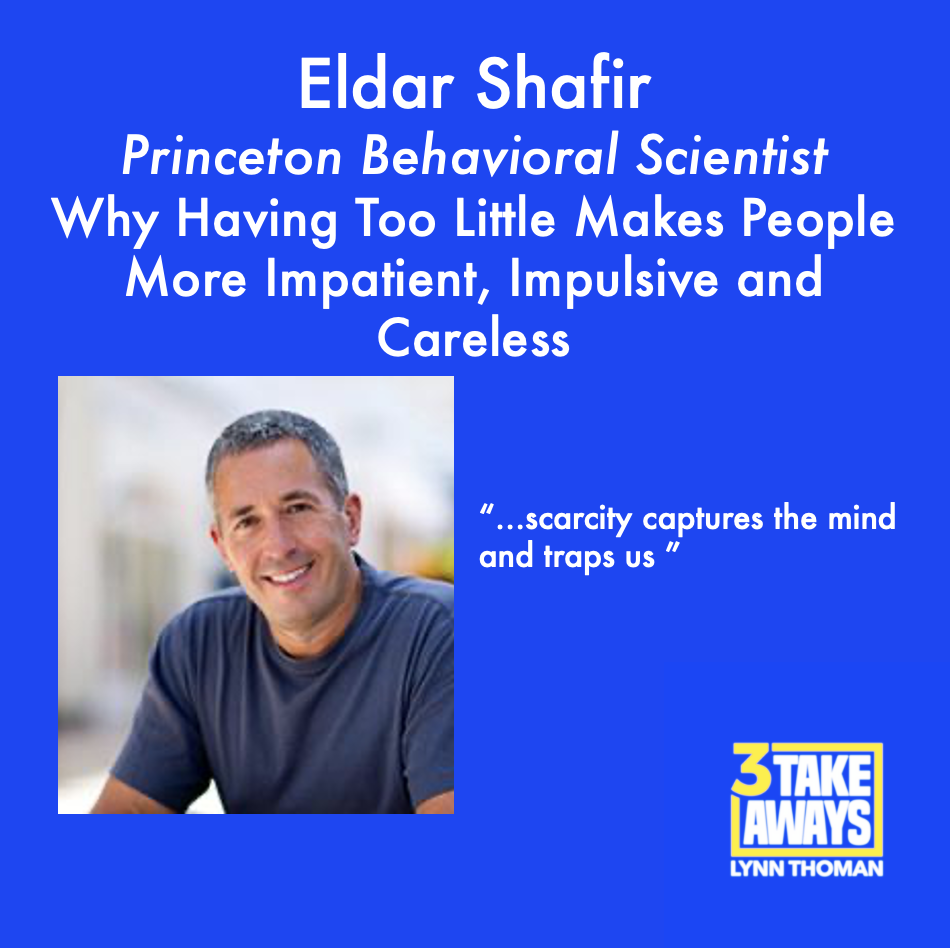
Why Having Too Little Makes People Perform Worse and Become More Impatient, Impulsive and Careless: Princeton Behavioral Scientist Eldar Shafir
Learn how scarcity of anything - money, food or social connections - affects our daily lives and leads us astray. Scarcity reduces both intelligence and control. Having too little preoccupies and taxes the mind, making life much harder. "Even smiling and being pleasant is hard when your mind is taxed. The employee snaps at rude customers ... The parent snaps at the child ... The server rings up the wrong item.”
Find out about the latest cutting edge behavioral science and how we can all manage scarcity for better satisfaction and success with Princeton behavioral scientist Eldar Shafir.
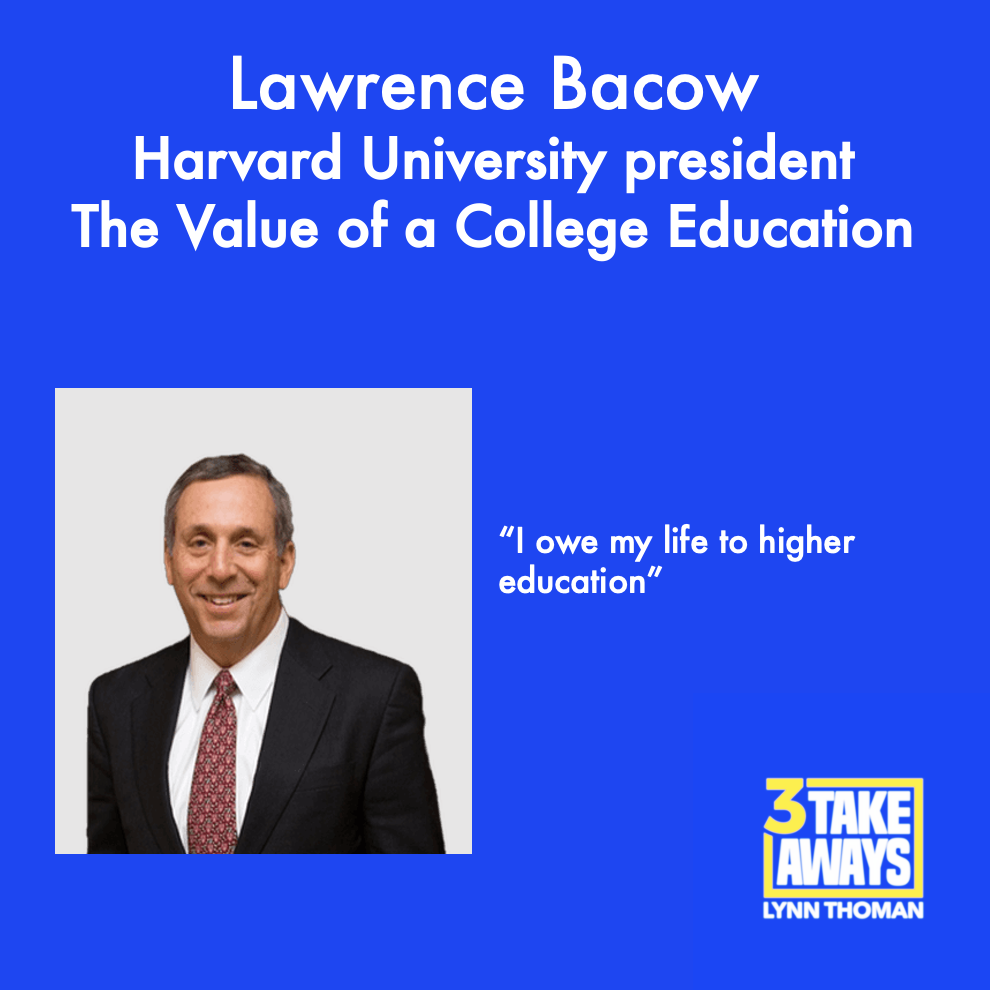
Harvard University President Lawrence Bacow: The Value of a College Education & Investing in the Future
Lawrence Bacow, President of Harvard University, shares how he sees the future of education and the values he leads by at Harvard. Learn the role of universities in a democracy, the importance of teaching students to think critically and why he believes the value of a liberal education is higher than ever.

Harvard Business School’s Bill Sahlman: What I’ve Learned Reading 10,000 Business Plans and Investing in Hundreds of Startups
Of the 10,000 business plans Bill Sahlman has read, only 3 companies met their plan. Find out what it takes to succeed. Entrepreneurs have to be really good at running tests and execution trumps idea. Jeff Bezos is the most effective experimentalist in history. Bill Gates did not invent word processing, the spreadsheet, or presentation graphics; rather he took ideas and out executed everyone else.

When Women Lead: A Groundbreaking Look at Bias, Leadership and the Future of Work with CNBC’s Julia Boorstin
The deck is still stacked against women in the workplace. Learn how some women dramatically defy the odds, and what both men and women can learn from them to succeed. Don’t miss this eye-opening conversation with CNBC Senior Correspondent Julia Boorstin.
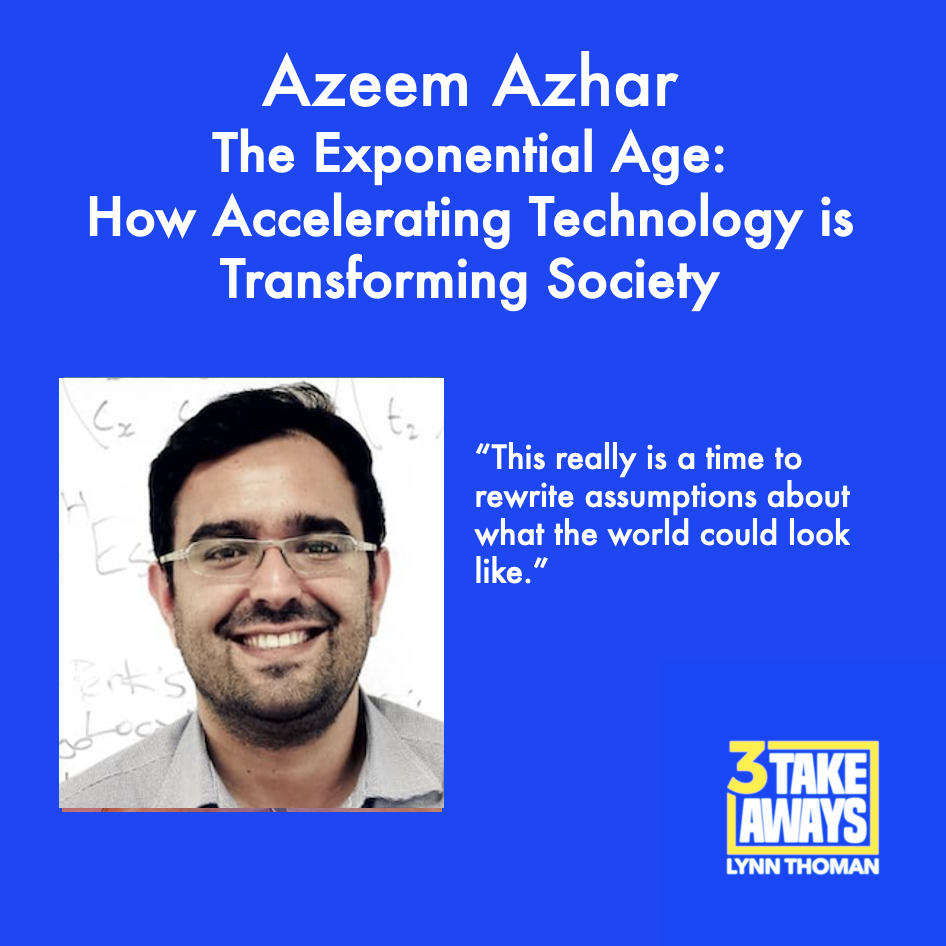
The Exponential Age: How Accelerating Technology is Transforming Business, Politics and Society with Tech Seer Azeem Azhar
Technology is advancing at exponential speed, and humanity is having serious trouble keeping up. Azeem Azhar, a tech seer who has founded and sold four companies, shares his unique insights into what he calls the “exponential gap” and its impact on business and society.

Explore Grand Mysteries of Space, Time, Life, and the Cosmos – with World-Renowned Physicist Brian Greene
He’s been called “a successor to Einstein.” Here you’ll see why, as physicist Brian Greene offers profound insights into our place in the universe, how the world ends, the possibility of a parallel universe, and the cosmic pursuits of Jeff Bezos and Elon Musk. Don’t miss this brilliant and deeply stimulating conversation.
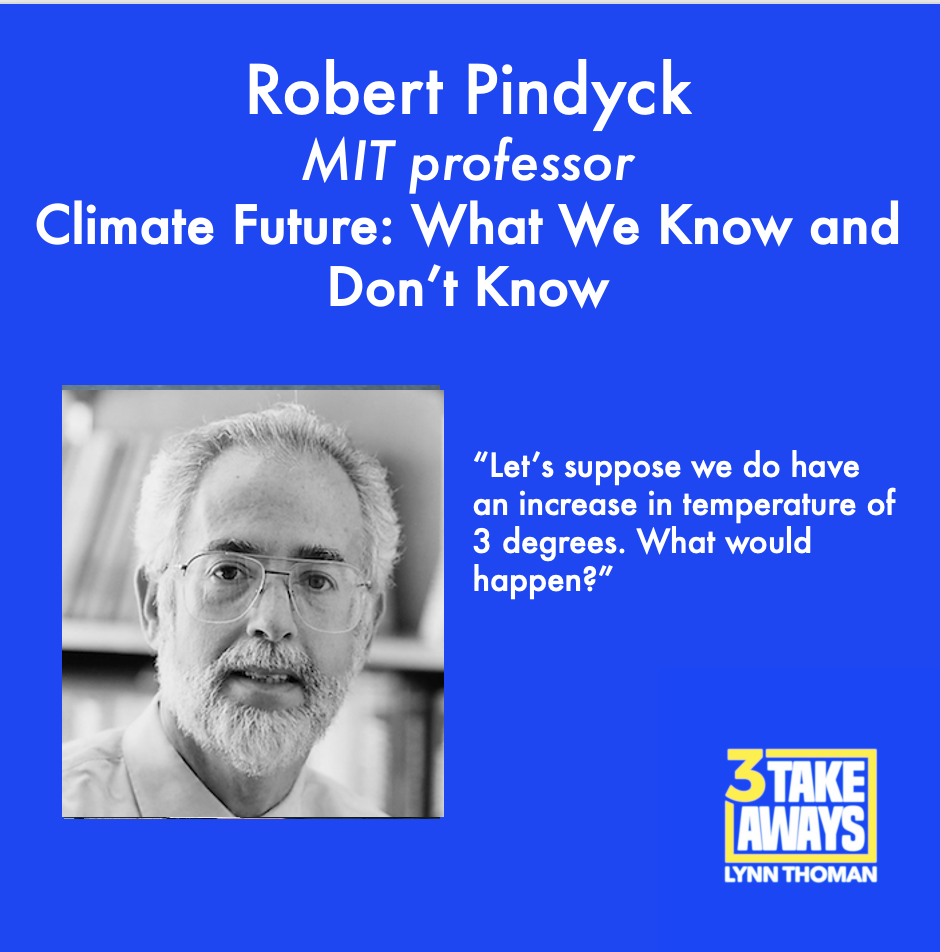
Climate Future: What We Know and Don’t Know with MIT’s Robert Pindyck
Current debates over climate change are focused almost entirely on reducing emissions - which is something we should do - but we also need to answer the question, how should we be adapting?
MIT’s Robert Pindyck shares what we know and don’t know and how we can adapt given the enormous climate uncertainty.

Ask For More: 2 Questions to Negotiate Almost Anything with Columbia Law School Mediation Clinic Director Alex Carter
Did you know that by asking better questions, you get better answers and better results from negotiations, as well as conversations? Learn what the 2 best questions are, and why these 2 questions work almost magically in negotiations as well as in conversations - including those with spouses, children, and colleagues.
Negotiation is not a zero-sum game. It’s an essential skill for your career that can also improve your closest relationships and your everyday life.
Alex Carter is Director of Columbia Law School’s Mediation Clinic. Her Wall Street Journal bestselling book is Ask For More.

Former FCC Chair Tom Wheeler: Our Loss of Privacy Is Worse Than You Think, No Matter What You Think
Your entire life is an open book of information collected by tech companies. According to Tom Wheeler, former head of the Federal Communications Commission, the privacy problem is shockingly large, getting bigger, and has frightening consequences. What, if anything, can be done? Listen and find out.
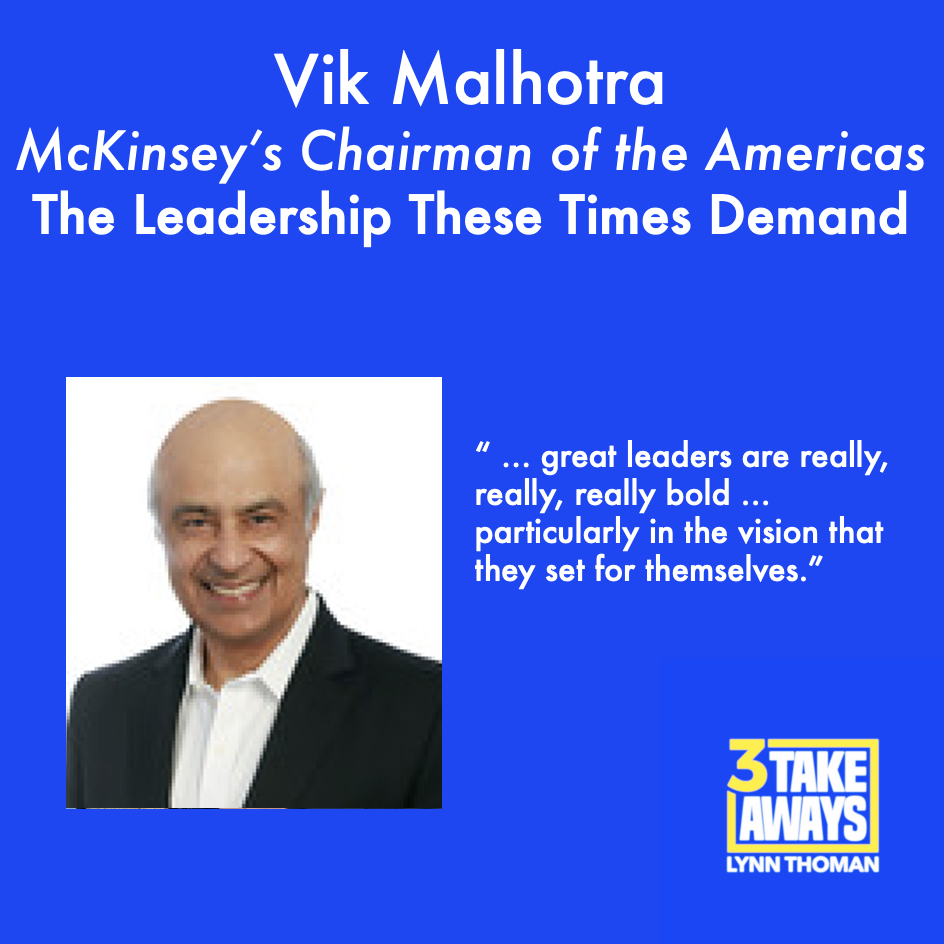
The Leadership These Times Demand – with Vik Malhotra, McKinsey’s Chairman of the Americas
Being a leader of any organization today may be more difficult than ever. What enables some leaders to thrive while others fail? What are some of the qualities and actions vital for success?
Vik Malhotra, McKinsey and Company’s Chairman of the Americas, shares his insights from interviewing and advising today’s elite business leaders. He is a co-author of the New York Times bestseller, CEO Excellence: The Six Mindsets That Distinguish the Best Leaders from the Rest.

Unconscious Bias is Real, So Are the Solutions: Harvard Kennedy School Former Academic Dean Iris Bohnet
How can we reduce or neutralize unconscious bias? It’s a critical question these days – especially with DEI in mind – answered by an expert: Iris Bohnet, the former Academic Dean of the Kennedy School and co-Director of the Women and Public Policy Program. She calls it “unfreezing” our minds, and offers some surprisingly simple solutions.

Former Secretary of Education Arne Duncan: Education Runs on Lies
“Education runs on lies. That’s probably not what you’d expect from a former Secretary of Education, but it’s the truth.” Arne Duncan exposes the lies and the broken system that have caused American kids to fall behind. He also shares what really works.

When Willpower Isn’t Enough: Psychologist Wendy Wood Reveals Keys to Success
The research is in, and it shows that a large part of being successful is understanding how to form the right habits. In fact, forming habits can be more important than willpower and self-control.
Wendy Wood, noted USC Psychology Professor, shares some of her research findings and simple strategies that enable many people to live successful, satisfying lives. She is the author of Good Habits, Bad Habits: The Science of Making Positive Changes That Stick.
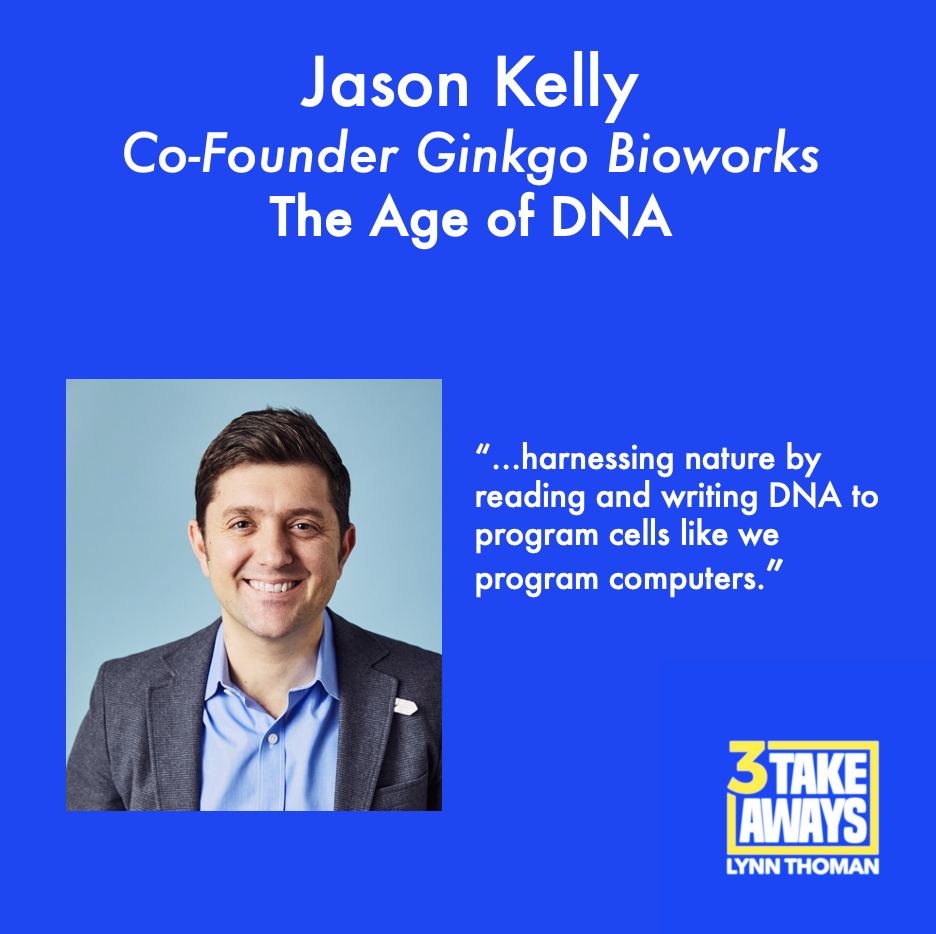
The Age of DNA: Ginkgo Bioworks Co-Founder Jason Kelly
Steve Jobs once said that the biggest innovations in the 21st century would be at the intersection of biology and technology. Nature offers tantalizing examples of the magical properties of biology—self-assembly, self-repair, self-replication and more.
Jason Kelly, co-founder and CEO of Ginkgo Bioworks, shares his dream of harnessing nature by reading and writing DNA to program cells like we program computers.
Ginkgo is a synthetic biology company that programs cells for customers in the pharmaceutical, food, agriculture and energy industries.

Why We Laugh: The Many Shapes and Forms of Laughter with Neuroscientist Sophie Scott
Laughter, it turns out, is not primarily a response to humor. Neuroscientist Sophie Scott CBE shares why we laugh, how it works and the many sins it covers.
We explore how laughter bonds us, where it breaks us, and the ways we use it. We should all bring a greater sense of understanding and intention to our laughter. Sophie Scott is a neuroscientist and professor at UCL whose research focuses on the science of laughter.
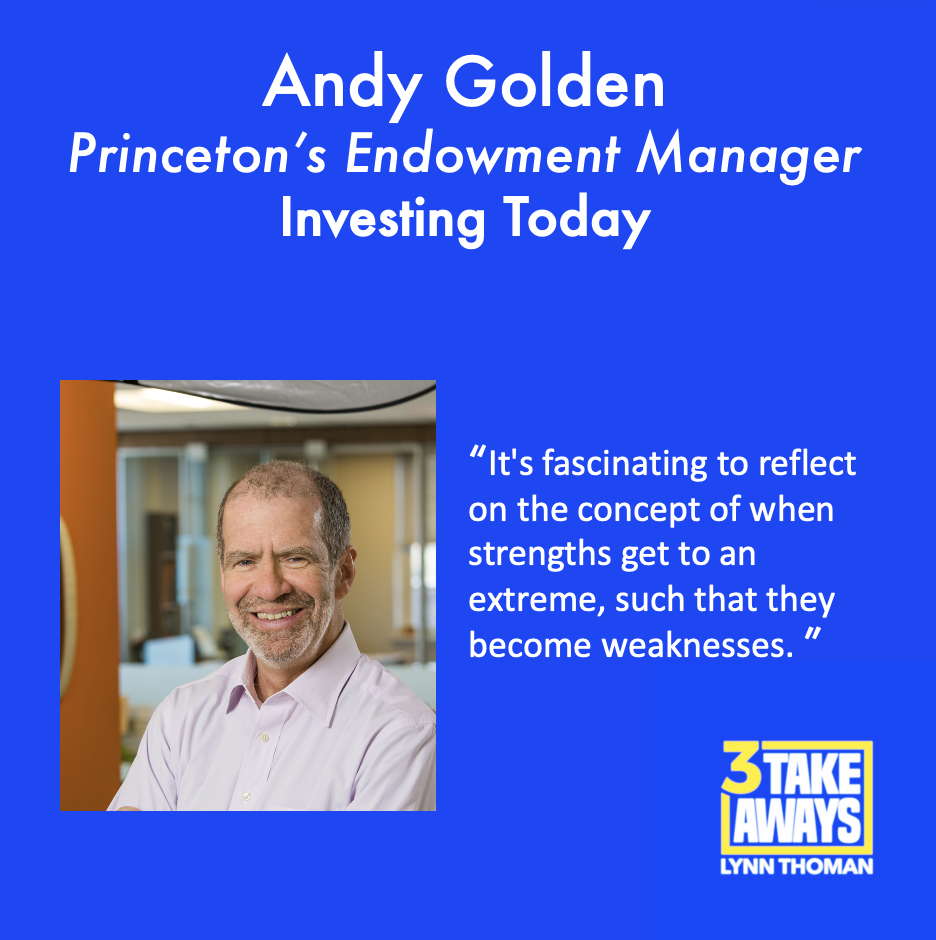
Princeton’s Endowment Manager Andy Golden on Investing Today
The president of Princeton University Investment Company (PRINCO), which manages Princeton’s endowment, talks about investing in today’s world. Andy Golden shares how he selects partners, evaluates investments, and creates a winning environment. PRINCO recently earned nearly a 50% return in a single year.
Andy also explores the differences in long term and short term investing and how a ten year time horizon is short term for endowments. PRINCO is one of the highest performing endowments in the world.