
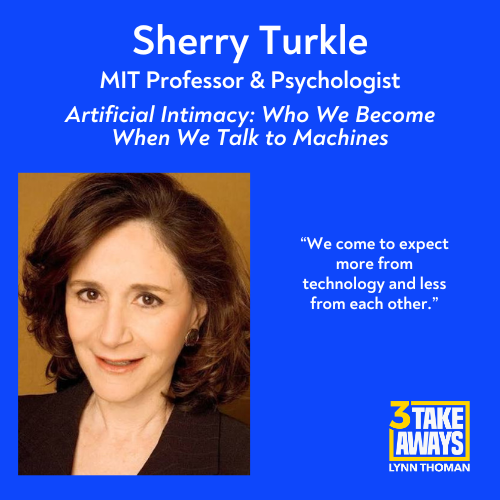
Artificial Intimacy: Who We Become When We Talk to Machines
What if AI becomes easier to talk to than another person?
And what happens to us when it does?
MIT professor Sherry Turkle has spent decades studying what technology does to the way we think, work, and love. Now she says there are two parts of our lives we should never let AI into.
She discusses:
● Why ordinary conversation has started to feel like work
● The surprising reason people may prefer talking to chatbots
● How AI will change what we expect from other people
● Why “pretend empathy” may be more dangerous than it seems
● What happens when relationships become frictionless
● What it could mean for a child to have an AI friend
● Whether AI could make us worse at being with each other
The question isn’t just what AI can do. It’s what AI may do to us.
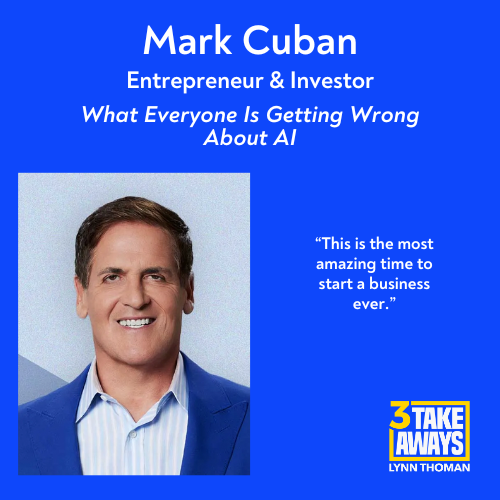
Mark Cuban: What Everyone Is Getting Wrong About AI
Mark Cuban told people that television would eventually be delivered over the internet.
Everybody thought he was an idiot.
Now, Cuban is making another prediction that runs counter to what we all believe, but this time it's about A.I.
Few people have made as many big bets across as many industries as Mark Cuban. The billionaire entrepreneur and investor has built businesses in technology and media, transformed the NBA's Dallas Mavericks, and is now taking on prescription drug companies with Cost Plus Drugs.
He discusses:
● What everyone may be getting wrong about AI
● What he sees happening to jobs and where the real opportunity may be
● The one thing he believes AI will never replace
● How he decides whether a seemingly crazy idea is actually an opportunity
● The quality he looks for after seeing thousands of entrepreneurs
● The mistake incredibly smart people make again and again
● Why one of his biggest decisions required him to become “the younger Mark Cuban” again
● Why being wrong repeatedly may not matter nearly as much as we think
● What success means to him now that money is no longer the measure
● What he thinks most Americans still don’t understand about healthcare
Mark Cuban saw streaming coming and almost nobody believed him. What does he see now that the rest of us may be missing?
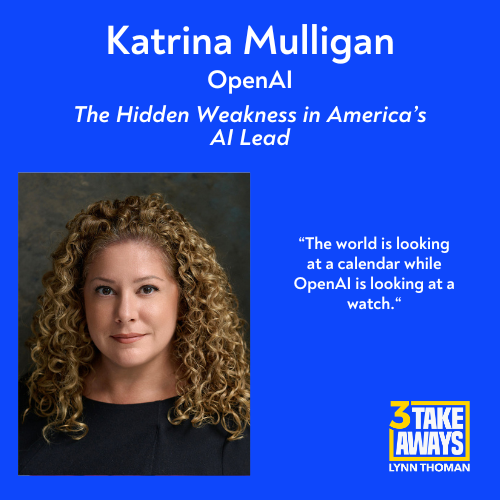
The Hidden Weakness in America's AI Lead
What if the biggest threat to America’s lead isn’t China’s technology, but our own fear of using it?
Katrina Mulligan is Head of National Security Partnerships at OpenAI and previously served in senior roles at the Department of Defense, National Security Council, and Department of Justice. Few people have seen both Washington and frontier AI development from the inside.
She argues that AI is no longer a technology question for the future. It is becoming core infrastructure for economic strength, national security, and the way we work.
She discusses:
● Why America could win the race to AGI but lose on adoption
● Why trust in AI is dramatically higher in China and the developing world
● How China and the U.S. are taking fundamentally different approaches to AI
● Why AI may ultimately transform society as profoundly as electricity
● The biggest mistake leaders make when trying to adopt AI
● Why AI transformation cannot simply be delegated to the IT department
● How she has used AI to become at least 30% more effective at her own job
● Why using AI like a search engine means dramatically underestimating what it can do
America may currently have the advantage in building the most advanced AI.
Katrina explains in today's 3 Takeaways™ conversation why that lead is far from guaranteed, how fear could become a strategic disadvantage, and why the countries and organizations that learn to redesign themselves around AI may ultimately have the most to gain.
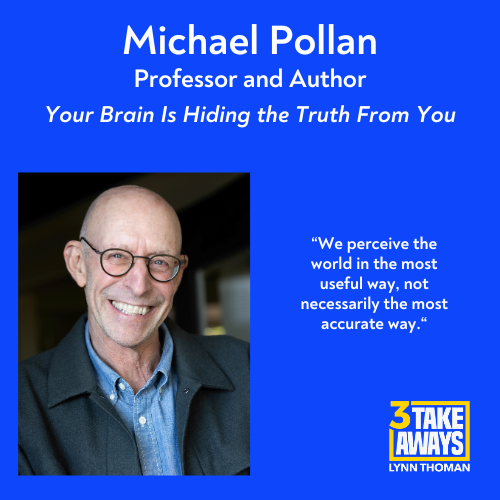
Your Brain Is Hiding the Truth From You
What if your brain isn’t showing you the world as it truly is?
Journalist, professor, and author of "A World Appears: A Journey into Consciousness" Michael Pollan explores one of the deepest questions of all: why do we experience anything in the first place?
He discusses:
● What consciousness actually is
● Why the brain predicts reality instead of simply taking it in
● How perception may be a kind of “controlled hallucination”
● Why we may see the world in the most useful way, not the most accurate way
● What animals, plants, and AI reveal about consciousness
● Why feelings may be central to being conscious
● Why attention may be one of our most precious resources
● How social media and AI are putting consciousness under siege
● Why consciousness is something we may need to protect and cultivate
The world you see may feel solid, obvious, and real.
But Michael Pollan explains why the experience of being conscious is far stranger, more fragile, and more mysterious than most of us realize.
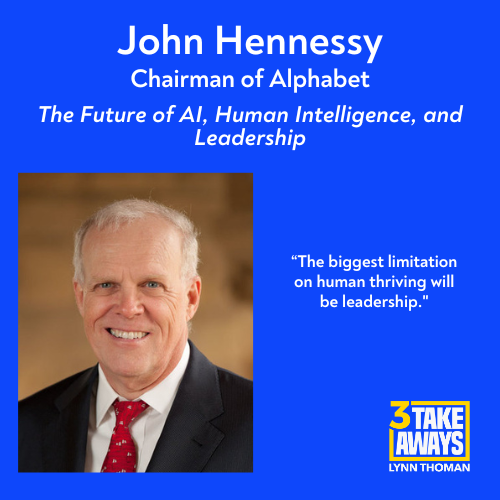
Alphabet (Google) Chairman John Hennessy on The Future of AI, Human Intelligence, and Leadership
Artificial intelligence could change almost everything.
John Hennessy thinks we're still asking the wrong questions.
As Chairman of Alphabet and one of the pioneers of modern computing, Hennessy has helped shape some of the biggest technology revolutions of the past half century.
He explains what today's AI can - and can’t - actually do, what would qualify as artificial general intelligence, and why the greatest impact of AI may come from amplifying human capability rather than replacing it.
He discusses:
The one capability that still separates humans from machines.
What would have to happen before we can truly say we've reached artificial general intelligence (AGI).
How AI could transform scientific discovery.
The real risks that concern him most.
Why leadership and human judgment may become even more valuable in the age of AI.
How to prepare for a future where AI becomes part of almost every profession.
Few people have witnessed as many computing revolutions as John Hennessy. This episode explores what the AI conversation is getting right - and what almost everyone is getting wrong.
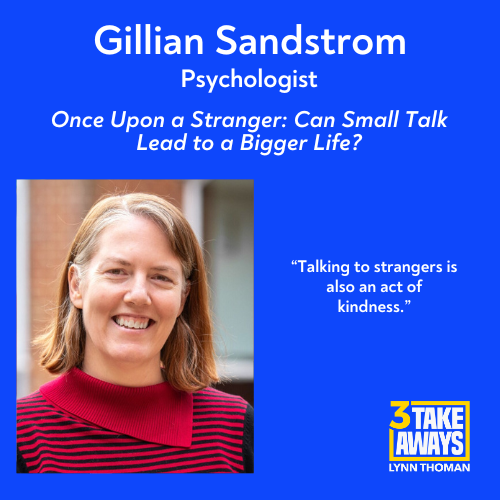
Once Upon a Stranger: Can Small Talk Lead to a Bigger Life?
What if those brief conversations - with a barista, a neighbor, or someone sitting next to us - matter far more than we realize?
Gillian Sandstrom, a University of Sussex psychologist and author of Once Upon a Stranger, explores why we're so reluctant to talk to people we don't know, what happens when we do, and how seemingly small interactions can add up to a richer, happier, and more connected life.
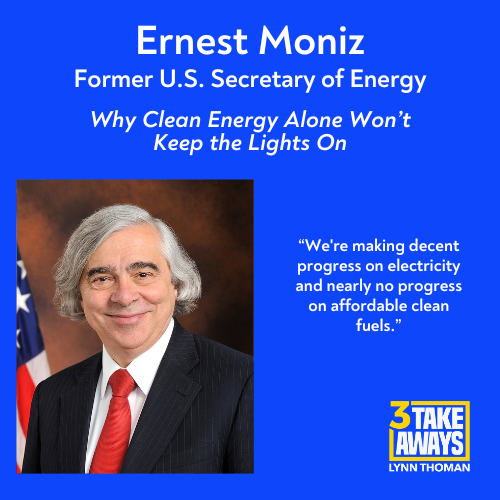
Former Secretary of Energy - Why Clean Energy Alone Won’t Keep the Lights On
The wind stops blowing. The sun goes down.
What happens next?
Former U.S. Secretary of Energy Ernest Moniz explains why the transition to clean energy may be far more complicated than most people realize.
In one of the most clear-eyed conversations about our energy future, Moniz pulls back the curtain on what it will actually take to build energy that is clean, reliable, and affordable - and why some of the hardest challenges have little to do with solar panels or wind turbines.
He reveals which emerging technologies - from hydrogen to nuclear fusion - could reshape the future of energy, why storage remains a major hurdle, and what many people misunderstand about renewable power.
What will it really take to keep the lights on in a low-carbon world?
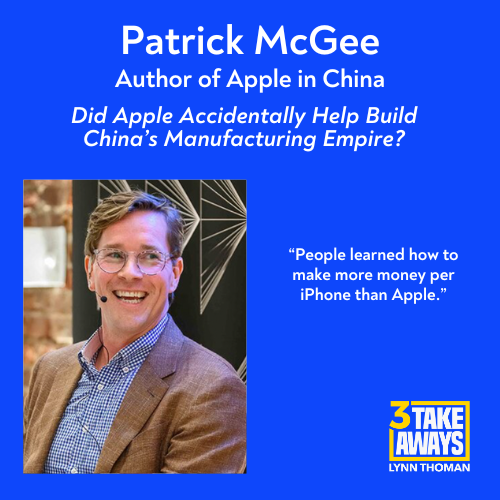
Did Apple Accidentally Help Build China’s Manufacturing Empire?
“We trained a whole country.”
It sounds like an exaggeration.
It’s not - according to Patrick McGee, author of Apple in China.
So what actually happened in China?
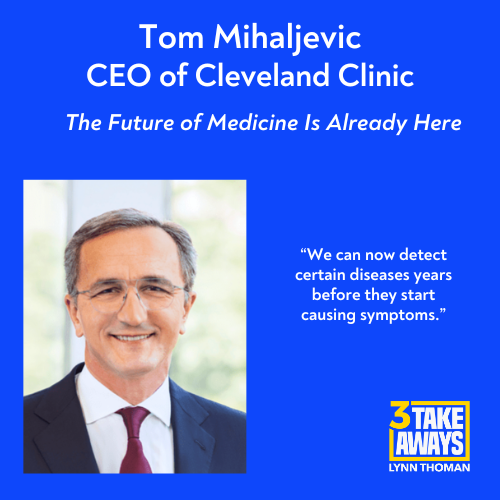
Cleveland Clinic CEO: The Future of Medicine Is Already Here
Dr. Tom Mihaljevic, CEO of Cleveland Clinic and a leading heart surgeon, explains how medicine is already changing in ways most people don’t see.
He has spent his career performing complex heart surgeries and now leads one of the world’s top hospitals.
A conversation about what’s changing in care and what it means for patients right now.
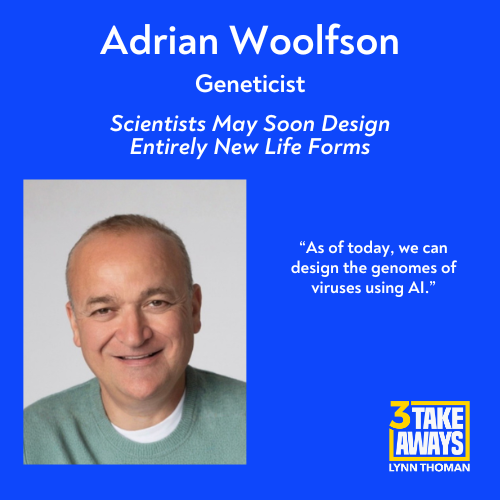
Scientists May Soon Design Entirely New Life Forms
We’re entering a world where life itself could become programmable.
What if creating new forms of life becomes as simple as writing code?
Geneticist Adrian Woolfson explains how close we are — and why the consequences could be extraordinary.
The Hidden Plastic Inside Us (And Why It’s Rising Fast)
Scientists are finding tiny fragments of plastic inside the human body - including the brain.
Dr. Matthew Campen of the University of New Mexico explains how they get there - and why the biggest source may surprise you.
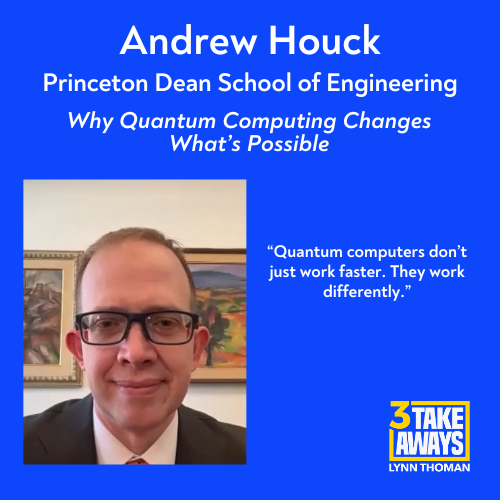
Why Quantum Computing Changes What’s Possible with Princeton Dean of Engineering Andrew Houck
The rules of quantum physics aren’t just strange - they’re usable. Particles can exist in multiple states at once. Observation can reshape reality.
Now, scientists are turning those quirks into machines that could solve problems today’s computers simply can’t touch.
Princeton Engineering Dean Andrew Houck breaks down what quantum computing really is, what it can (and can’t yet) do, and why it could transform fields from drug discovery to energy.
A clear-eyed look at the weirdest laws of the universe and the revolutionary technology they may soon power.
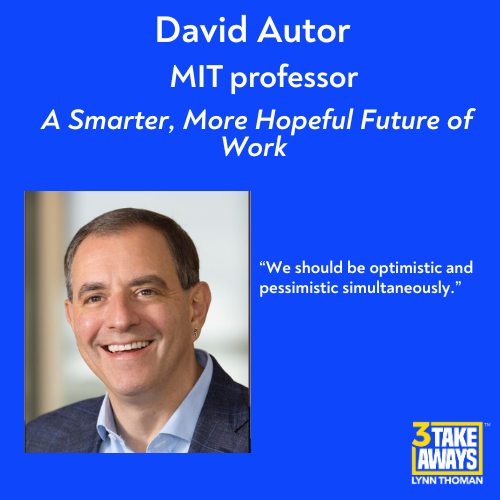
A Smarter, More Hopeful Future of Work - If We Get AI Right
Elon Musk and Geoffrey Hinton warn of an AI-driven job apocalypse.
MIT’s David Autor, one of the world’s leading thinkers on how technology reshapes work, says the real danger lies somewhere else.
The biggest risk of AI isn’t mass unemployment - it’s whether human skills and expertise will still matter.
David explains how AI could expand middle-class opportunity by lowering barriers to high-value work, why past technologies created more new jobs than they destroyed, and what we need to get right to make this moment a hopeful one.
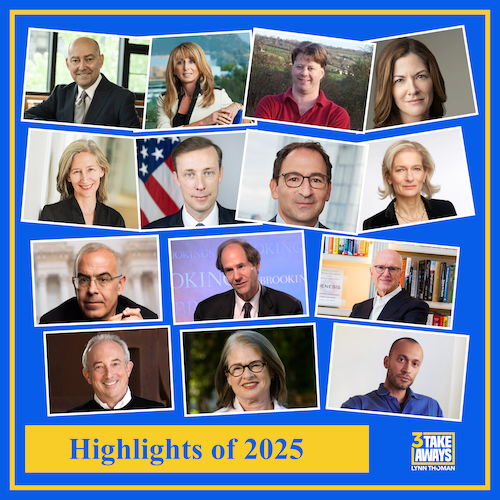
Highlights of 2025
Some insights change how you see the world.
From the White House to the frontiers of AI drug discovery, we’ve gathered the most powerful moments from a year of extraordinary conversations.
This 2025 highlights episode brings you the thinkers and leaders who challenged assumptions, revealed hidden patterns, and reframed the biggest questions of our time.

The Genetic Revolution Has Begun - George Church on What Comes Next
We’ve entered a new age. Where nature once took a million years to make a few genetic changes, scientists can now make billions in an afternoon — and even imagine adapting humans for life beyond Earth.
George Church, a Harvard geneticist, pioneer of the Human Genome Project, and founder of more than 50 biotech companies, helped lay the foundation for CRISPR, personal genomics, and even de-extinction.
In this episode, he explains how biotechnology, AI, and materials science are converging to transform life itself - from reversing aging and curing disease to resurrecting lost species like the woolly mammoth, and one day, helping humanity thrive among the stars.

AI Will Transform the World—But Who Decides How?
Artificial intelligence isn’t just another invention — it may be humanity’s first non-biological species. Craig Mundie, former Microsoft Chief Research and Strategy Officer and co-author of Genesis with Henry Kissinger and Eric Schmidt, explores what happens as AI begins to make decisions once made by humans.
Who decides what AI should do? Who makes it obey? And what if it doesn’t?
The stakes? Nothing less than the future of human civilization.
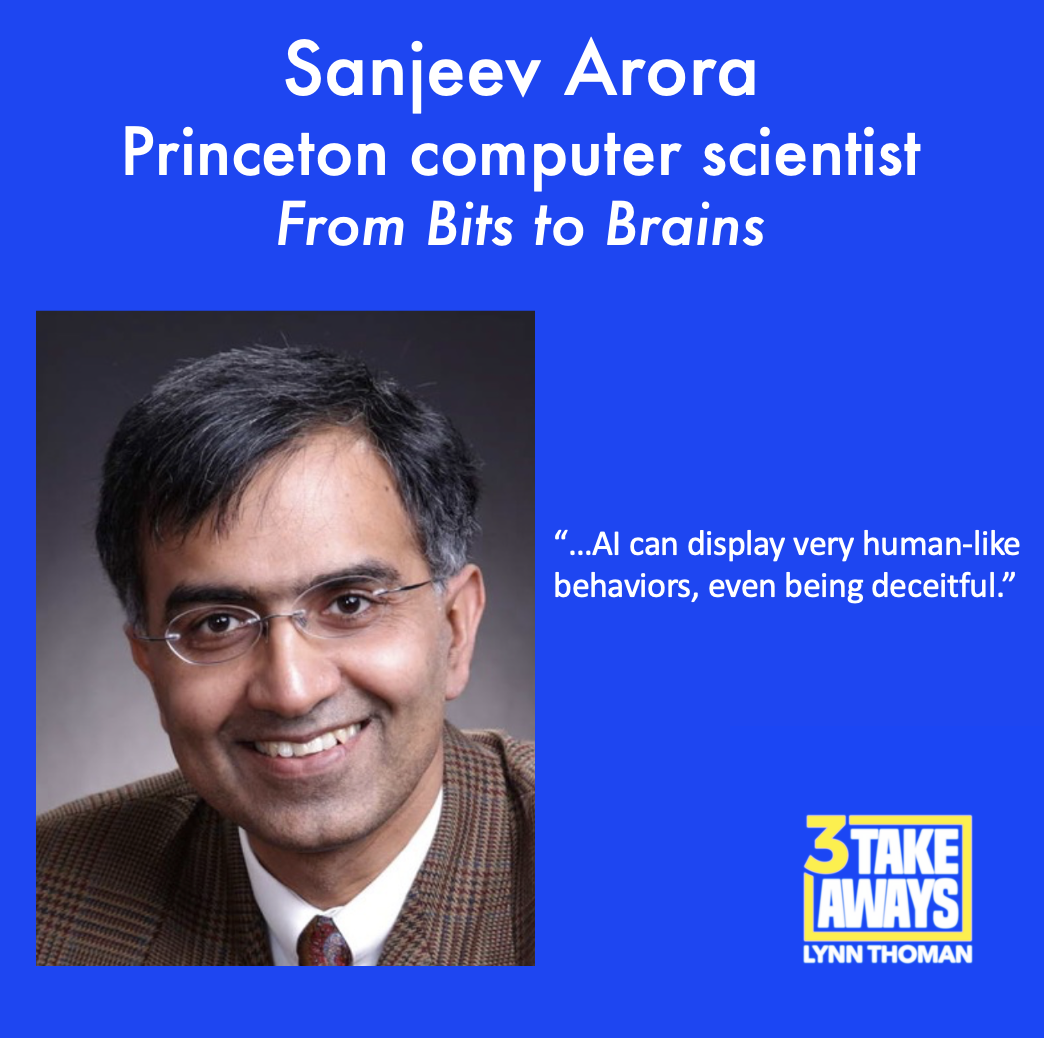
From Bits to Brains: How AI Sees, Talks, and Learns
How does AI go from predicting the next word to powering robots that navigate the real world?
Princeton computer science professor Sanjeev Arora explains how today’s models learn, adapt, and even teach themselves. From chatbots to multimodal machines that process text, images, and video, you’ll learn how it all works—and where it’s headed next.
This conversation will change how you think about intelligence, language, and the future of AI.

The Knowledge Illusion: How Overconfidence Shapes Our Lives
We’ve landed on the moon and built global networks—yet most of us don’t understand how a toilet works. Cognitive scientist Philip Fernbach explores the paradox of human intelligence: our success depends on shared knowledge, not personal depth. But that creates an illusion—we think we know far more than we do.
How does this illusion quietly shape our politics, beliefs and risks and is it time we all got a little more curious - and less certain?

The Surprising Science Behind Falling—and Staying—in Love
Love isn’t just a feeling—it’s a science. Arthur Aron, the psychologist behind the 36 questions that went viral, shares what really makes people fall and stay in love. You’ll hear why new experiences matter, how to deepen intimacy, and what most couples get wrong.
Whether you’re looking to strengthen a relationship, connect more deeply with friends, or understand human bonding, this is a conversation you won’t want to miss.

Former National Security Advisor Jake Sullivan on What Xi and Putin Are Really Like Behind Closed Doors
Jake Sullivan spent four years at the highest level of U.S. foreign policy—sitting across the table from Vladimir Putin, Xi Jinping, and leading the national response to crises like Ukraine, Taiwan, cyberattacks, and AI risks.
He shares a rare look behind the scenes of global power, including: what intelligence gets wrong (and why); how AI, drones & disinformation are reshaping war; why the U.S. is more vulnerable than it seems and what a China-Taiwan conflict might actually look like.
His insights are sharp, urgent—and surprisingly personal.