
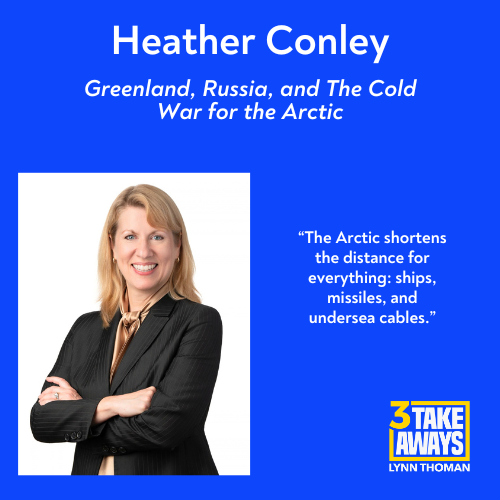
Greenland, Russia, and The Cold War for the Arctic
As Arctic ice melts, the struggle for the frozen north is beginning to resemble a new Cold War.
Russian submarine activity is rising. China is mapping the seabed and expanding its icebreaker fleet. And Greenland sits at the center of a growing contest over shipping routes, critical minerals, energy, and missiles.
Heather Conley, a senior fellow at the American Enterprise Institute and one of America’s leading experts on the Arctic, Europe, and transatlantic security, spent years warning that this region would become critical to America’s defense.
What did she see that America and its allies were missing and how much time is left to prepare?
They discuss:
● How much of what Trump wanted in the recent Greenland deal was already possible
● Why Russia sees the Arctic as central to its military and economic future
● Why the United States secretly offered Denmark $100 million for Greenland after WWII
● Why Greenland’s location makes it critical to America’s missile defenses
● How the Arctic shortens distances for missiles, submarines, ships, and undersea cables
● Why China’s Arctic science will also have military applications
● What Greenland’s mineral wealth means for U.S. interests
● Why America cannot adequately defend the Arctic without its allies
The next decade in the Arctic could determine whether America and its allies are ready for when the Cold War in the Arctic gets hot.
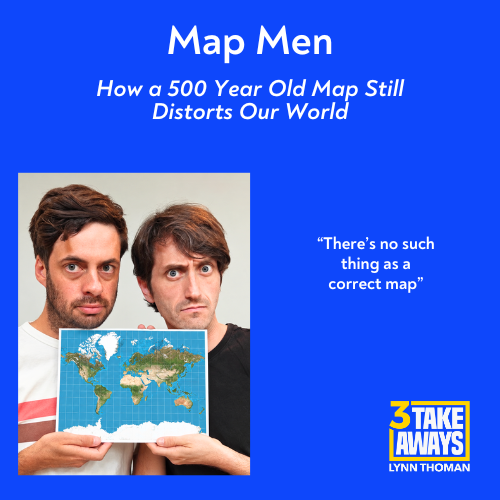
How a 500 Year Old Map Still Distorts Our World
The world map we grew up with makes Greenland and Africa look the same size. The problem? Africa is actually an astonishing 14 times larger.
The even larger problem? There's no such thing as an accurate map. They all distort how we see the world.
Jay Foreman and Mark Cooper-Jones are comedians, writers, and YouTubers with millions of followers where they are better known as Map Men. Their new book, This Way Up, explores how maps shape our understanding of the world and what happens when they inevitably get it wrong.
They discuss:
● Why a 500-year-old deeply-flawed map became our standard picture of the world
● Why Greenland and other northern countries appear much larger than they really are
● Why creating a completely accurate flat map is impossible
● Why north being “up” is simply a convention
● How a country’s apparent size and position may shape how important we believe it is
● Why Google Maps can display different borders depending on where it is viewed
● What London taxi drivers reveal about navigation, memory, and the brain
● How relying on GPS is weakening abilities we once took for granted
● What GPS and AI have in common
Maps look objective, but they're actually very subjective and flawed. Where and how are they misleading us?
And if you're looking for a more topical take on Greenland, Trump, and the recent security deal -- be sure to tune in next week for my conversation with security expert Heather Conley.
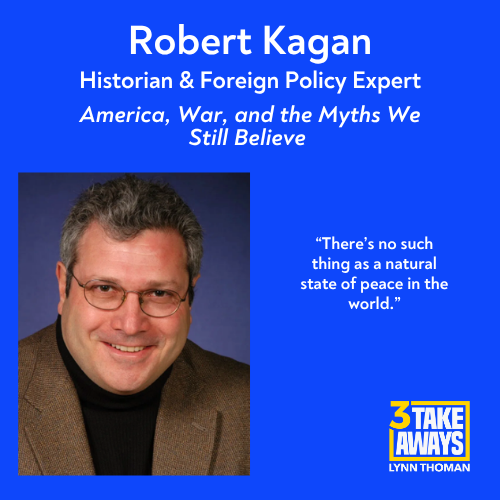
America, War, and the Myths We Still Believe
What if one of the things Americans believe most deeply about America simply isn’t true?
Americans have a powerful story about who they are and why America acts when it does.
Historian Robert Kagan, a senior fellow at the Brookings Institution, says America's own history tells a very different story.
He discusses:
● The biggest myth Americans believe about their own country
● What American history looks like when you strip that myth away
● Why America keeps doing something it insists it doesn’t want to do
● Whether America’s wars were really forced upon it
● The unexpected connection between American power and the threats America faces
● What China and Russia may understand about America that Americans don’t
● What happens if America turns inward again
What if the biggest thing Americans misunderstand about their role in the world isn’t the world?
It’s America.
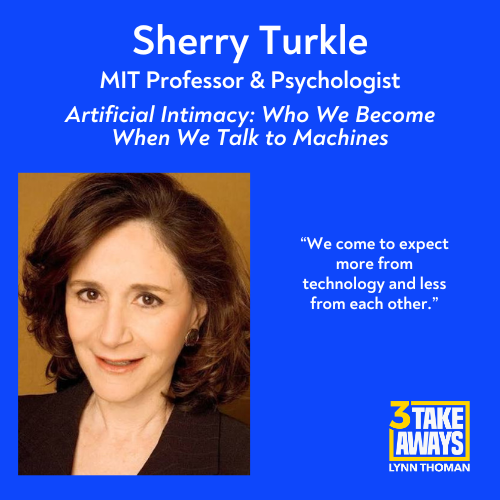
Artificial Intimacy: Who We Become When We Talk to Machines
What if AI becomes easier to talk to than another person?
And what happens to us when it does?
MIT professor Sherry Turkle has spent decades studying what technology does to the way we think, work, and love. Now she says there are two parts of our lives we should never let AI into.
She discusses:
● Why ordinary conversation has started to feel like work
● The surprising reason people may prefer talking to chatbots
● How AI will change what we expect from other people
● Why “pretend empathy” may be more dangerous than it seems
● What happens when relationships become frictionless
● What it could mean for a child to have an AI friend
● Whether AI could make us worse at being with each other
The question isn’t just what AI can do. It’s what AI may do to us.
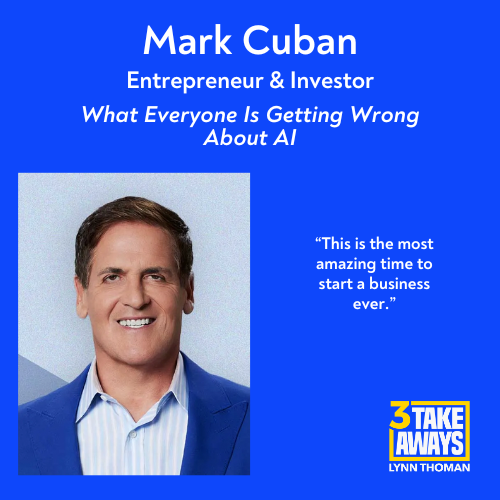
Mark Cuban: What Everyone Is Getting Wrong About AI
Mark Cuban told people that television would eventually be delivered over the internet.
Everybody thought he was an idiot.
Now, Cuban is making another prediction that runs counter to what we all believe, but this time it's about A.I.
Few people have made as many big bets across as many industries as Mark Cuban. The billionaire entrepreneur and investor has built businesses in technology and media, transformed the NBA's Dallas Mavericks, and is now taking on prescription drug companies with Cost Plus Drugs.
He discusses:
● What everyone may be getting wrong about AI
● What he sees happening to jobs and where the real opportunity may be
● The one thing he believes AI will never replace
● How he decides whether a seemingly crazy idea is actually an opportunity
● The quality he looks for after seeing thousands of entrepreneurs
● The mistake incredibly smart people make again and again
● Why one of his biggest decisions required him to become “the younger Mark Cuban” again
● Why being wrong repeatedly may not matter nearly as much as we think
● What success means to him now that money is no longer the measure
● What he thinks most Americans still don’t understand about healthcare
Mark Cuban saw streaming coming and almost nobody believed him. What does he see now that the rest of us may be missing?
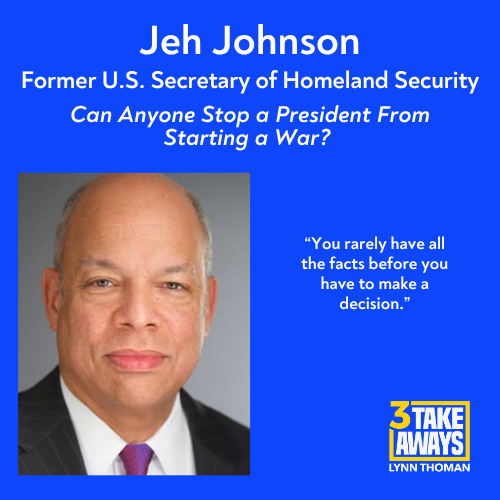
Can Anyone Stop a President From Starting a War?
What if the president can act before Congress has time to stop him?
As former U.S. Secretary of Homeland Security, former General Counsel of the Department of Defense, and a member of the National Security Council, Jeh Johnson has advised presidents on war, terrorism, cyber threats, and some of the country’s most consequential national security decisions.
He has seen what happens when the pressure to “do something” collides with incomplete intelligence, rapidly changing facts, political pressure, and enormous presidential power.
He discusses:
● Why “Mr. President, do something” can be dangerous advice
● Why Congress has formally declared war in only five conflicts in U.S. history
● How much military force a president can order without first going to Congress
● What happens to constitutional checks and balances when weapons can strike in minutes
● Why presidential power looks different from inside the Oval Office
● What actually happens inside the Situation Room when the intelligence is incomplete and the stakes are enormous
● The threat that worries him the most
The Constitution gives Congress the power to declare war. But modern military strikes and warfare can move extraordinarily fast.
So who can stop a president from starting a war? Where are the limits on presidential power when a decision has to be made in minutes? And when the law leaves enormous discretion in the hands of one person, how much ultimately depends on that person’s judgment and restraint?
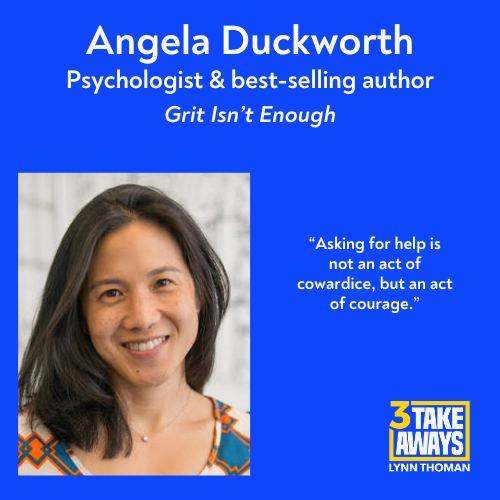
Angela Duckworth: Grit Isn't Enough
What if trying harder is sometimes exactly the wrong thing to do?
Angela Duckworth, University of Pennsylvania psychologist, MacArthur Fellow, and author of the #1 New York Times bestseller Grit, has spent years studying achievement. In her new book, Situated, she explores why perseverance alone isn't enough.
She discusses:
• How Angela and her husband nearly “gritted” their way out of their marriage
• How much your environment shapes who you become
• The small change that can make good habits easier
• Why parents may be asking the wrong question about their children
• How peer pressure can become a force for good
• Whether AI could make us worse at thinking
• When changing your situation matters more than changing yourself
We spend enormous energy trying to improve ourselves. Angela Duckworth asks a different question: what if the more important thing is to change what’s around us?
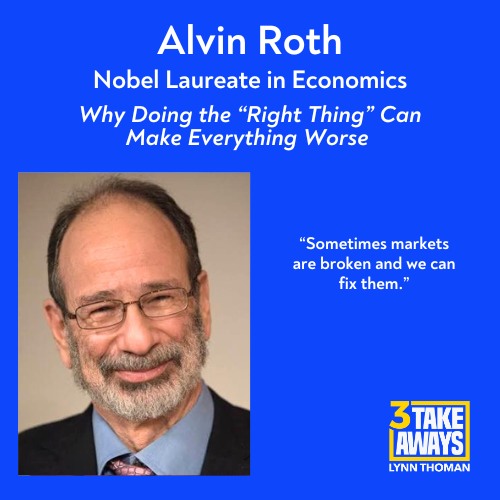
Why Doing the “Right Thing” Can Make Everything Worse
What can we do when doing the morally “right” thing produces worse outcomes?
And what if some of society’s strongest moral instincts are preventing us from solving problems we all agree are terrible?
Alvin Roth is a Stanford professor and Nobel Prize-winning economist whose work has helped redesign real-world systems, including kidney exchanges and the way doctors are matched with hospitals. His new book, Moral Economics, tackles a harder category of problems: markets and behaviors we find morally objectionable, even when banning them may create consequences we don’t want.
He discusses:
Why nearly 100,000 Americans can be waiting for a kidney
What prohibitions of alcohol and heroin can teach us
What happened when Rhode Island accidentally legalized indoor prostitution
Whether paying kidney donors could save lives without creating an ethically unacceptable market
Why evidence becomes especially important when reasonable people disagree about morality
Whether performance-enhancing drugs could eventually become as ordinary as coffee
Some policies sound obviously right when judged by their intentions. But what happens when you judge them by their actual consequences?
Roth pushes into the uncomfortable territory between those two questions: when banning something creates a black market, when changing a rule may save more lives than inventing a new technology, and what we should do when the outcome we believe is morally necessary turns out to be something we cannot actually achieve.
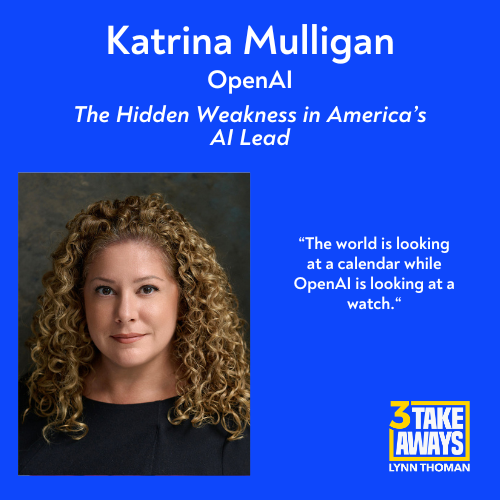
The Hidden Weakness in America's AI Lead
What if the biggest threat to America’s lead isn’t China’s technology, but our own fear of using it?
Katrina Mulligan is Head of National Security Partnerships at OpenAI and previously served in senior roles at the Department of Defense, National Security Council, and Department of Justice. Few people have seen both Washington and frontier AI development from the inside.
She argues that AI is no longer a technology question for the future. It is becoming core infrastructure for economic strength, national security, and the way we work.
She discusses:
● Why America could win the race to AGI but lose on adoption
● Why trust in AI is dramatically higher in China and the developing world
● How China and the U.S. are taking fundamentally different approaches to AI
● Why AI may ultimately transform society as profoundly as electricity
● The biggest mistake leaders make when trying to adopt AI
● Why AI transformation cannot simply be delegated to the IT department
● How she has used AI to become at least 30% more effective at her own job
● Why using AI like a search engine means dramatically underestimating what it can do
America may currently have the advantage in building the most advanced AI.
Katrina explains in today's 3 Takeaways™ conversation why that lead is far from guaranteed, how fear could become a strategic disadvantage, and why the countries and organizations that learn to redesign themselves around AI may ultimately have the most to gain.
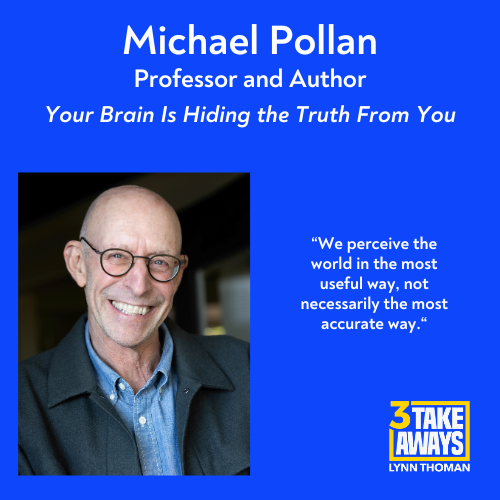
Your Brain Is Hiding the Truth From You
What if your brain isn’t showing you the world as it truly is?
Journalist, professor, and author of "A World Appears: A Journey into Consciousness" Michael Pollan explores one of the deepest questions of all: why do we experience anything in the first place?
He discusses:
● What consciousness actually is
● Why the brain predicts reality instead of simply taking it in
● How perception may be a kind of “controlled hallucination”
● Why we may see the world in the most useful way, not the most accurate way
● What animals, plants, and AI reveal about consciousness
● Why feelings may be central to being conscious
● Why attention may be one of our most precious resources
● How social media and AI are putting consciousness under siege
● Why consciousness is something we may need to protect and cultivate
The world you see may feel solid, obvious, and real.
But Michael Pollan explains why the experience of being conscious is far stranger, more fragile, and more mysterious than most of us realize.
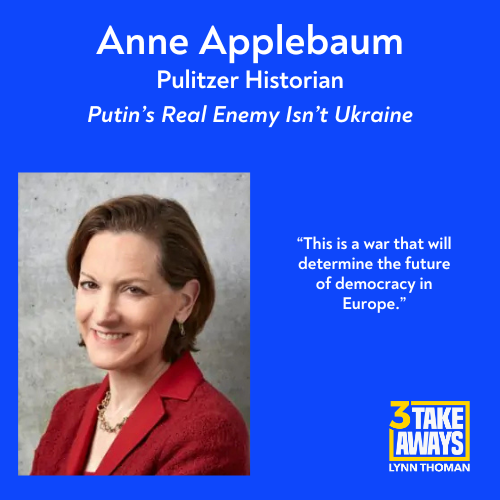
Putin’s Real Enemy Isn’t Ukraine
Why would the world’s largest country risk everything to destroy a smaller neighbor?
What is it about Ukraine that poses a greater threat to Vladimir Putin than any army?
Pulitzer Prize-winning historian and the Atlantic writer Anne Applebaum has spent decades studying Russia, Ukraine, and authoritarian regimes. She argues that the war is being fought over far more than territory and that the outcome will reshape democracy, military power, and global politics.
She discusses:
● What Putin was really trying to prevent when he invaded Ukraine
● Why nearly everyone underestimated the Ukrainian people
● How architects, engineers, and entrepreneurs began reinventing modern warfare
● What drones have revealed about the future of war
● The first warning sign that a democracy is beginning to fail
● How modern propaganda works without persuading anyone
● Why leaders often become dramatically richer as democracy weakens
The maps don’t tell the whole story of this war.
Anne Applebaum explains what’s actually at stake, why Putin hasn’t achieved what he expected, and what Ukraine may reveal about the hidden strengths of democracy.
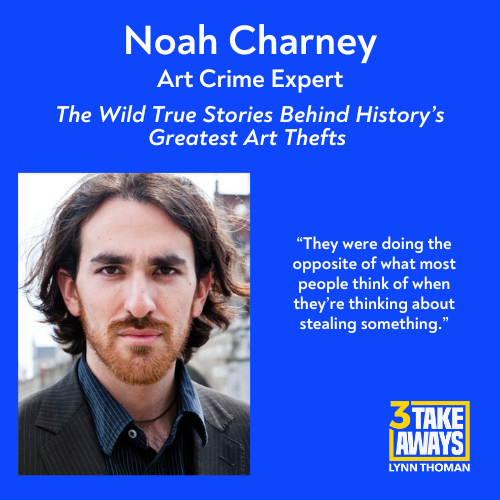
The Wild True Stories Behind History's Greatest Art Thefts
How does someone steal the Mona Lisa from the Louvre and simply walk away?
And how did an even more brazen crew rob the same museum in broad daylight last year with just a cherry picker and some power tools?
The real stories are stranger than Hollywood and best-selling author Noah Charney knows them all. One of the world’s leading experts on art crime, he has advised museums, governments, and law enforcement agencies around the world.
It turns out that stealing priceless art is often surprisingly easy. It’s turning the art into money that’s nearly impossible.
He explains:
◼ How a thief had unwitting Louvre workers help him walk out of the Louvre with the Mona Lisa
◼ How a brazen team used a cherry picker, power tools, and high-visibility vests to rob the Louvre in broad daylight
◼ Why most real art thieves are nothing like the elegant masterminds portrayed in movies
◼ How Napoleon turned art looting into an organized instrument of empire
◼ Why criminals steal art and how they get themselves apprehended
◼ How movies, fiction, and even the media can unintentionally help art criminals
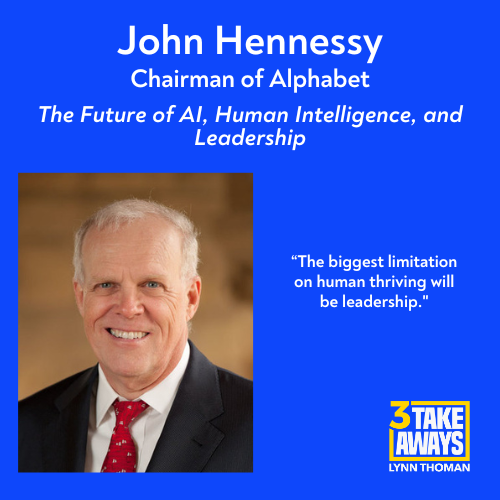
Alphabet (Google) Chairman John Hennessy on The Future of AI, Human Intelligence, and Leadership
Artificial intelligence could change almost everything.
John Hennessy thinks we're still asking the wrong questions.
As Chairman of Alphabet and one of the pioneers of modern computing, Hennessy has helped shape some of the biggest technology revolutions of the past half century.
He explains what today's AI can - and can’t - actually do, what would qualify as artificial general intelligence, and why the greatest impact of AI may come from amplifying human capability rather than replacing it.
He discusses:
The one capability that still separates humans from machines.
What would have to happen before we can truly say we've reached artificial general intelligence (AGI).
How AI could transform scientific discovery.
The real risks that concern him most.
Why leadership and human judgment may become even more valuable in the age of AI.
How to prepare for a future where AI becomes part of almost every profession.
Few people have witnessed as many computing revolutions as John Hennessy. This episode explores what the AI conversation is getting right - and what almost everyone is getting wrong.
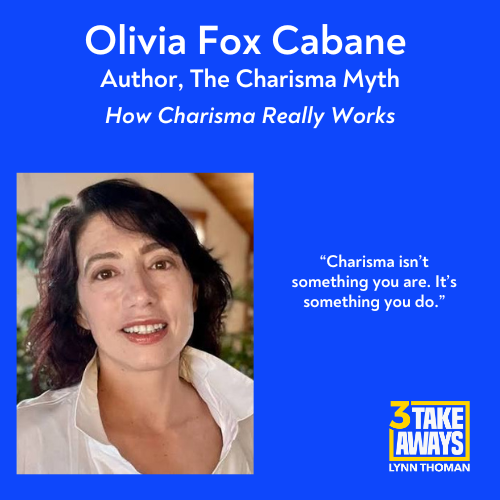
How Charisma Really Works
Why do some people instantly draw us in?
Olivia Fox Cabane reveals that charisma is not a gift. It is a skill—and most of us misunderstand what creates it.
In this episode, you’ll learn:
The three qualities that make someone charismatic
Why introverts can be highly magnetic
How people judge you before you speak
Why presence matters more than performance
The surprising link between confidence and self-compassion
Simple ways to become more charismatic immediately
Charisma is not just how people feel about you.
It is how you make them feel about themselves.
Olivia Fox Cabane is the author of The Charisma Myth.
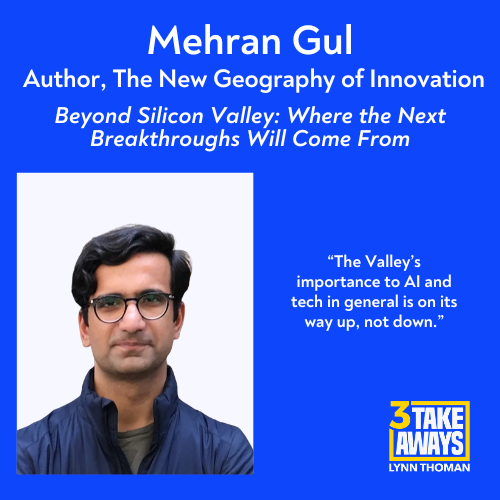
Beyond Silicon Valley: Where the Next Breakthroughs Will Come From
Everyone knows where the last generation of great technology companies came from.
The more interesting question is where the next generation will.
Mehran Gul spent years studying the world's most successful innovation hubs to understand why some places repeatedly create breakthrough companies while others never quite do.
He shares surprising insights about China's rise, Silicon Valley's future, and why artificial intelligence could reshape the global map of innovation in ways that few people expect.
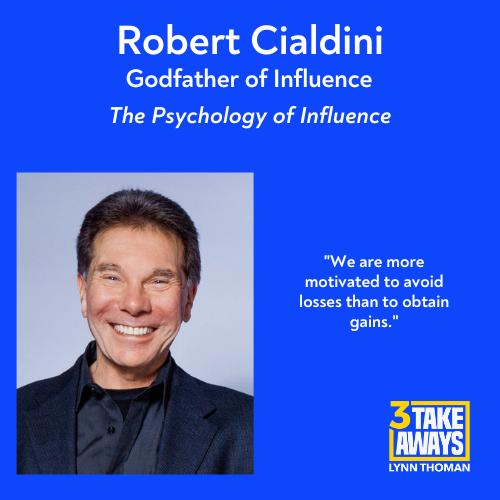
The Psychology of Influence with Robert Cialdini
Dr. Robert Cialdini, author of Influence - 5 million copies sold, and one of the most important books Warren Buffett says he's ever read - has spent decades studying why people say yes.
He reveals the psychological forces shaping our decisions, why tiny changes can dramatically influence outcomes, and how the most effective communicators get people to yes without anyone feeling pushed.
Once you understand these principles and hidden triggers, you'll start seeing them everywhere.
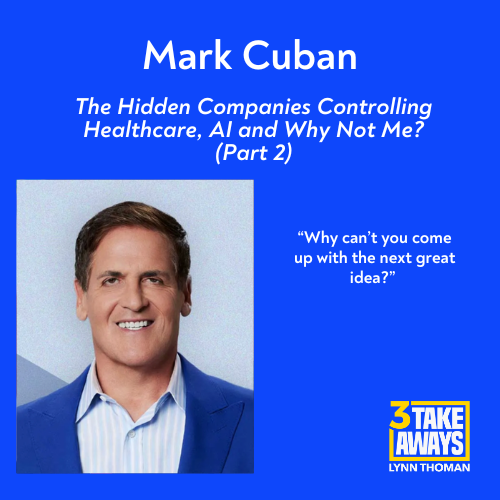
Mark Cuban: The Hidden Companies Controlling Healthcare, the Future of AI, and Why Not Me? (Part 2 of 2)
Most people think healthcare is broken by accident.
Mark Cuban says it isn't.
In part two of our conversation, he explains the hidden companies who really control healthcare, where AI is headed, and one opportunity many people may be overlooking.
He also shares the advice he gives, the three “superpowers” he believes matter more than talent, network, or money, and the one question he thinks everyone should ask themselves.
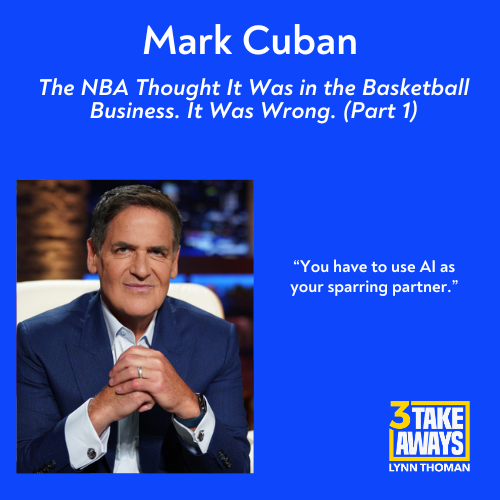
Mark Cuban: The NBA Thought It Was in the Basketball Business. It Was Wrong. (Part 1 of 2)
The NBA thought it was selling basketball.
Mark Cuban thought it was selling something else.
That insight shaped how he has built companies, evaluated opportunities, and challenged entire industries.
Mark Cuban also shares the skill he values most in entrepreneurs, and how AI is changing the way ambitious people learn.
The lesson starts with basketball. It ends somewhere much bigger.
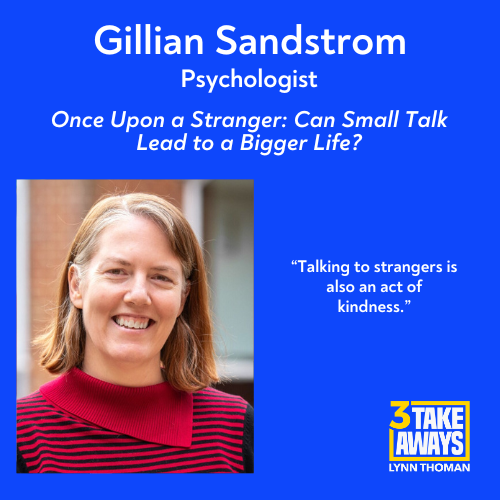
Once Upon a Stranger: Can Small Talk Lead to a Bigger Life?
What if those brief conversations - with a barista, a neighbor, or someone sitting next to us - matter far more than we realize?
Gillian Sandstrom, a University of Sussex psychologist and author of Once Upon a Stranger, explores why we're so reluctant to talk to people we don't know, what happens when we do, and how seemingly small interactions can add up to a richer, happier, and more connected life.
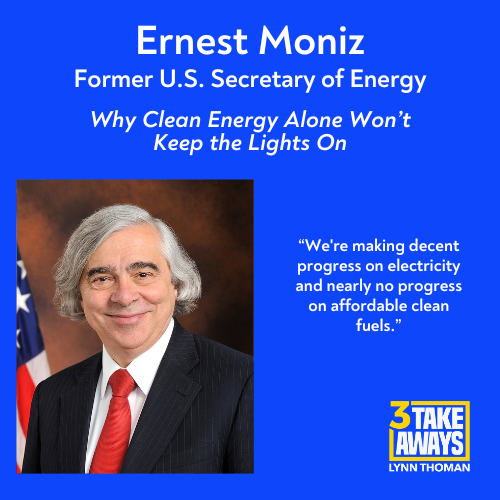
Former Secretary of Energy - Why Clean Energy Alone Won’t Keep the Lights On
The wind stops blowing. The sun goes down.
What happens next?
Former U.S. Secretary of Energy Ernest Moniz explains why the transition to clean energy may be far more complicated than most people realize.
In one of the most clear-eyed conversations about our energy future, Moniz pulls back the curtain on what it will actually take to build energy that is clean, reliable, and affordable - and why some of the hardest challenges have little to do with solar panels or wind turbines.
He reveals which emerging technologies - from hydrogen to nuclear fusion - could reshape the future of energy, why storage remains a major hurdle, and what many people misunderstand about renewable power.
What will it really take to keep the lights on in a low-carbon world?