
Which are the 10 Most Powerful and Compelling Takeaways of 2022? Listen and Find Out.
3 Takeaways features revealing conversations with the world’s foremost thinkers, business leaders, writers, politicians, scientists and other newsmakers, who each share three takeaways they consider vital. In this special year-end episode, we present the 10 most powerful and compelling takeaways of 2022.
Can you guess which takeaway is from each guest? The guests include:
Former Prime Minster of Australia
Former Chief of MI6
Founder of the world's largest hedge fund
7 other amazing guests

Former Senator Phil Gramm Explodes the Myth of American Inequality in an Eye-Opening Conversation
According to former Senator Phil Gramm, inequality in the U.S. is grossly overstated largely because it fails to take into account massive government aid to low income earners. The implications of this are huge, especially given the current debate about remaking capitalism. Don’t miss this important conversation.

The U.S. and the Holocaust: What did America Know and Do During the Greatest Atrocity of Our Time with Ken Burns' Co-Directors
What was America’s response to the Holocaust? What did we know and not know, do and not do, as the catastrophe unfolded? These questions resonate today, when the refugee crisis, immigration and antisemitism are making headlines. Don’t miss this powerful conversation with the co-directors of the new Ken Burns documentary film The U.S. and the Holocaust, Lynn Novick and Sarah Botstein.

Superabundance: Separating Fact From Myth About Human Flourishing on an Infinitely Bountiful Planet
Contrary to conventional wisdom, we are not living in an age of dwindling resources. Generations of people have been taught that the world's rapidly growing population is consuming the planet's natural resources at an alarming rate. But after analyzing the prices of hundreds of commodities and products over the last 100 years, Marian Tupy and Gale Pooley found that resources became more abundant as the population grew.
To their surprise, they found that we create ever more value out of natural resources, and that now is a time of superabundance and human flourishing. Don’t miss this compelling rationale for optimism.

Why the Lies We Tell in Public Are So Destructive with Duke's Timur Kuran
Hiding what we really think can have devastating social consequences, and helps explain the rise of Donald Trump, why Harvey Weinstein got away with it for so long, the unreliability of election polls, and much more. Don’t miss this eye-opening conversation with Duke’s Timur Kuran.

Complicit: When Good People Turn a Blind Eye to Rape, Thievery, and Fraud. With Harvard’s Max Bazerman
Countless people knew what Harvey Weinstein, Elizabeth Holmes, and the Catholic Church were doing – but remained silent. Why do good people allow the horrific behavior of others? Harvard professor Max Bazerman explores this complicity and offers solutions.

What Does the Work of The Future Look Like? With MIT Professor David Autor
Why will tech and automation never lead to the demise of human work? What qualifies as “good” work? What role will robots and AI play in the fast-approaching future? David Autor, MIT professor and co-chair of the MIT Task Force on The Work of The Future, provides answers in this riveting and enlightening conversation.

The Person You Mean To Be and A More Just Future with Social Scientist Dolly Chugh
It’s counter-intuitive but true: letting go of being a good person is key to becoming a better one, and often times it starts with acknowledging our unconscious bias. Social scientist and best-selling author Dolly Chugh offers phenomenal insight that can benefit us both at home and in the workplace.
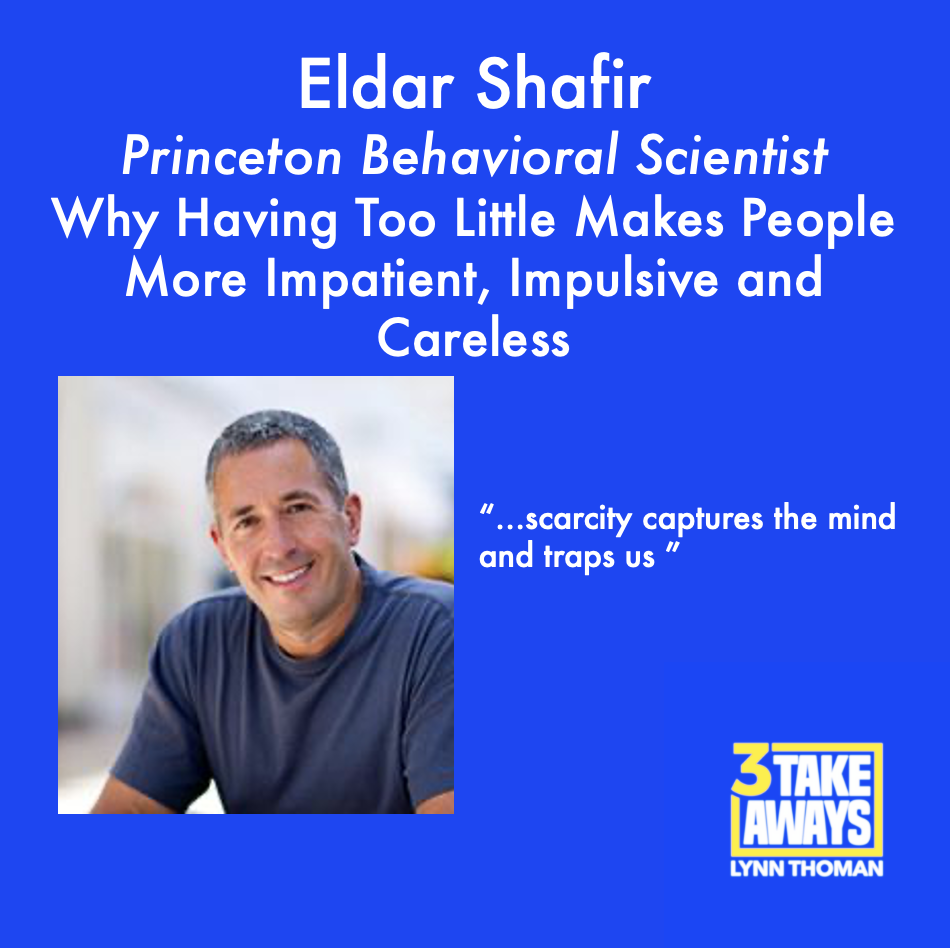
Why Having Too Little Makes People Perform Worse and Become More Impatient, Impulsive and Careless: Princeton Behavioral Scientist Eldar Shafir
Learn how scarcity of anything - money, food or social connections - affects our daily lives and leads us astray. Scarcity reduces both intelligence and control. Having too little preoccupies and taxes the mind, making life much harder. "Even smiling and being pleasant is hard when your mind is taxed. The employee snaps at rude customers ... The parent snaps at the child ... The server rings up the wrong item.”
Find out about the latest cutting edge behavioral science and how we can all manage scarcity for better satisfaction and success with Princeton behavioral scientist Eldar Shafir.
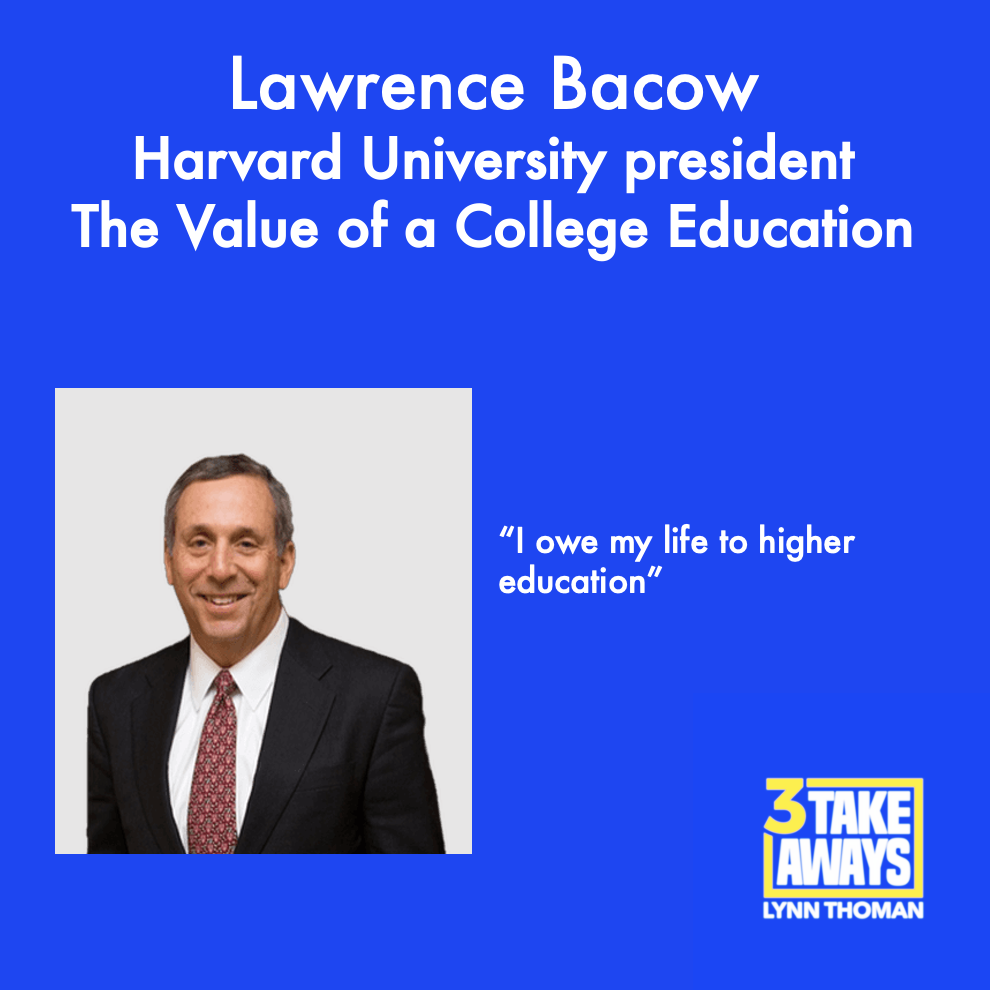
Harvard University President Lawrence Bacow: The Value of a College Education & Investing in the Future
Lawrence Bacow, President of Harvard University, shares how he sees the future of education and the values he leads by at Harvard. Learn the role of universities in a democracy, the importance of teaching students to think critically and why he believes the value of a liberal education is higher than ever.

When Women Lead: A Groundbreaking Look at Bias, Leadership and the Future of Work with CNBC’s Julia Boorstin
The deck is still stacked against women in the workplace. Learn how some women dramatically defy the odds, and what both men and women can learn from them to succeed. Don’t miss this eye-opening conversation with CNBC Senior Correspondent Julia Boorstin.
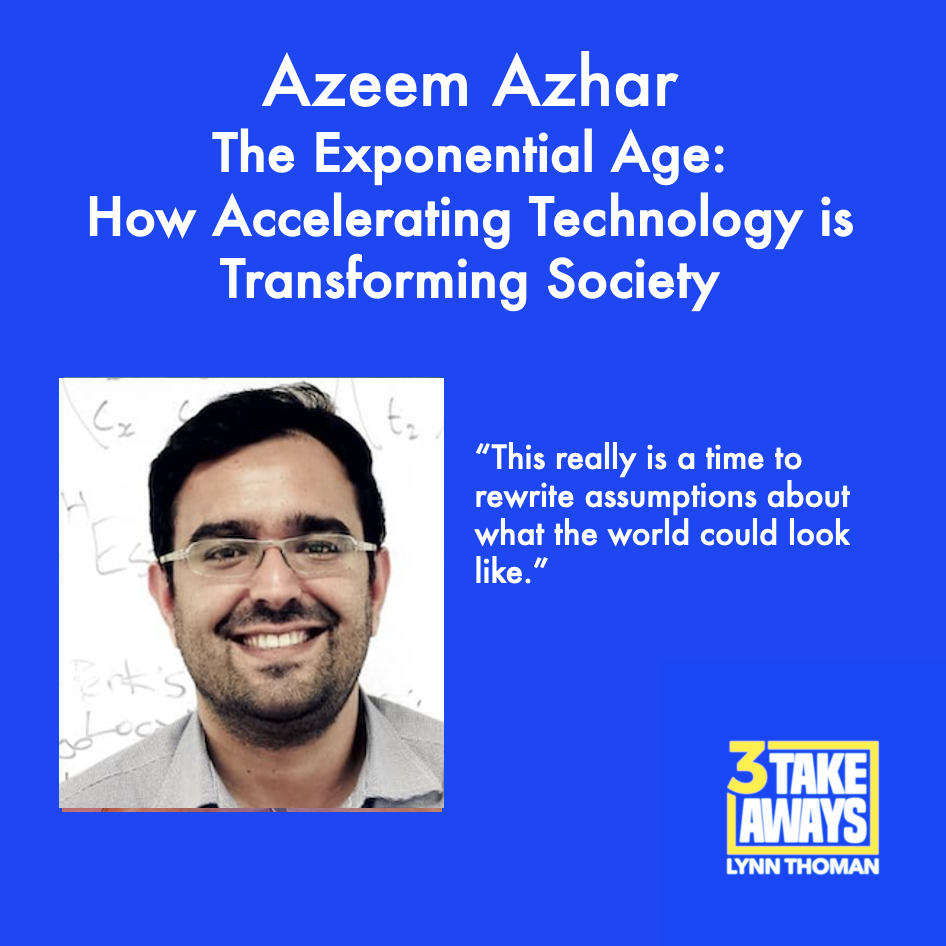
The Exponential Age: How Accelerating Technology is Transforming Business, Politics and Society with Tech Seer Azeem Azhar
Technology is advancing at exponential speed, and humanity is having serious trouble keeping up. Azeem Azhar, a tech seer who has founded and sold four companies, shares his unique insights into what he calls the “exponential gap” and its impact on business and society.
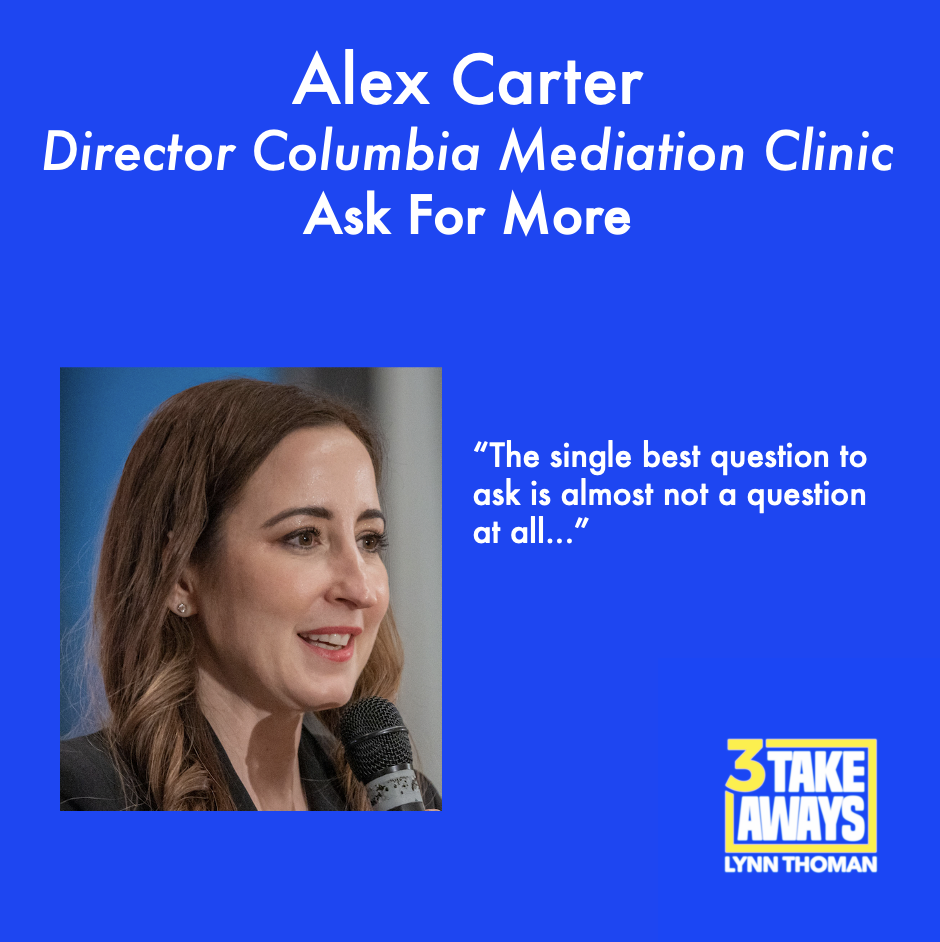
Ask For More: 2 Questions to Negotiate Almost Anything with Columbia Law School Mediation Clinic Director Alex Carter
Did you know that by asking better questions, you get better answers and better results from negotiations, as well as conversations? Learn what the 2 best questions are, and why these 2 questions work almost magically in negotiations as well as in conversations - including those with spouses, children, and colleagues.
Negotiation is not a zero-sum game. It’s an essential skill for your career that can also improve your closest relationships and your everyday life.
Alex Carter is Director of Columbia Law School’s Mediation Clinic. Her Wall Street Journal bestselling book is Ask For More.

Former FCC Chair Tom Wheeler: Our Loss of Privacy Is Worse Than You Think, No Matter What You Think
Your entire life is an open book of information collected by tech companies. According to Tom Wheeler, former head of the Federal Communications Commission, the privacy problem is shockingly large, getting bigger, and has frightening consequences. What, if anything, can be done? Listen and find out.

Unconscious Bias is Real, So Are the Solutions: Harvard Kennedy School Former Academic Dean Iris Bohnet
How can we reduce or neutralize unconscious bias? It’s a critical question these days – especially with DEI in mind – answered by an expert: Iris Bohnet, the former Academic Dean of the Kennedy School and co-Director of the Women and Public Policy Program. She calls it “unfreezing” our minds, and offers some surprisingly simple solutions.
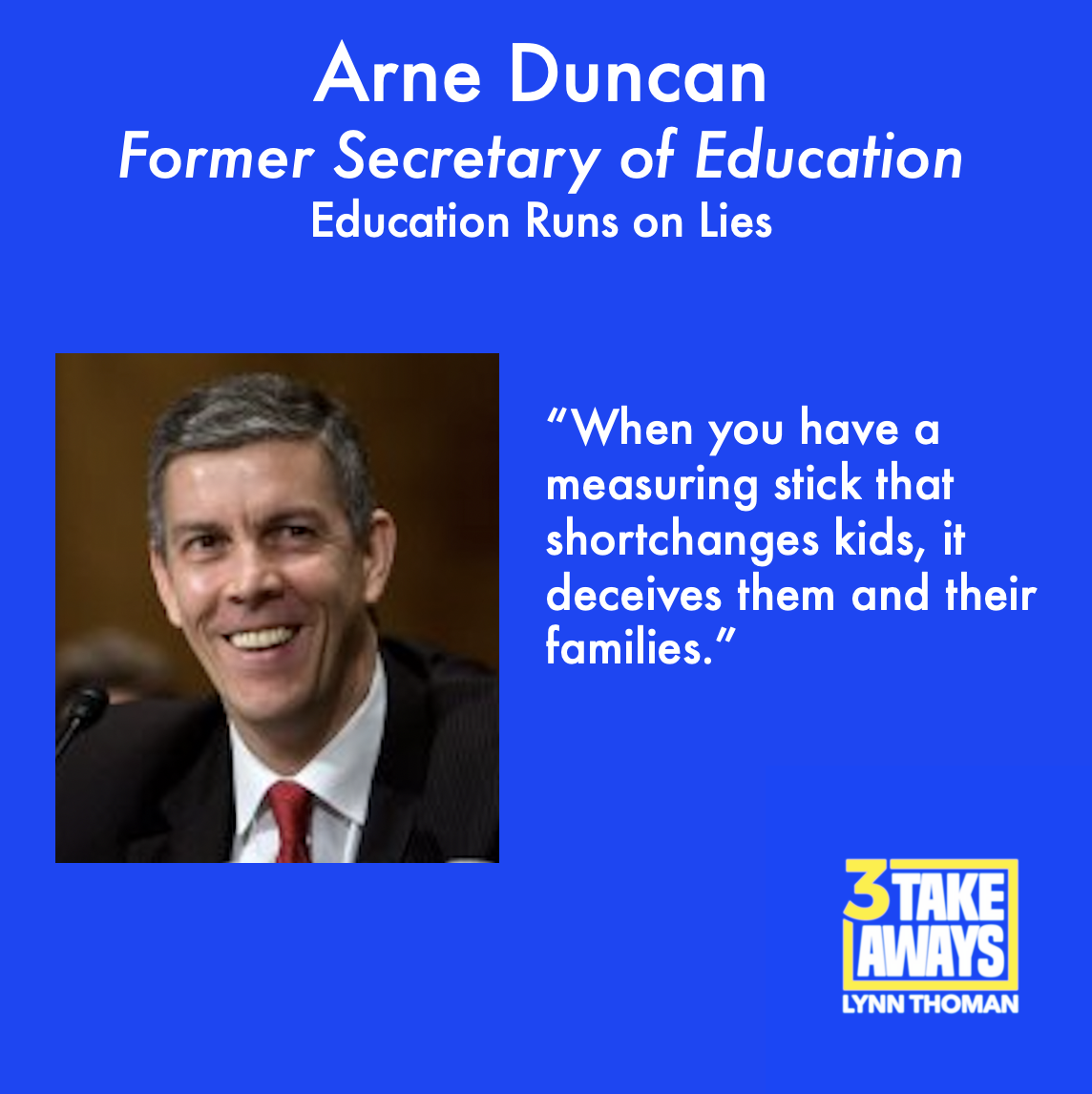
Former Secretary of Education Arne Duncan: Education Runs on Lies
“Education runs on lies. That’s probably not what you’d expect from a former Secretary of Education, but it’s the truth.” Arne Duncan exposes the lies and the broken system that have caused American kids to fall behind. He also shares what really works.

Why We Laugh: The Many Shapes and Forms of Laughter with Neuroscientist Sophie Scott
Laughter, it turns out, is not primarily a response to humor. Neuroscientist Sophie Scott CBE shares why we laugh, how it works and the many sins it covers.
We explore how laughter bonds us, where it breaks us, and the ways we use it. We should all bring a greater sense of understanding and intention to our laughter. Sophie Scott is a neuroscientist and professor at UCL whose research focuses on the science of laughter.

How We Can Defeat The Next Pandemic and The Future of Medicine: Dr. Eric Topol
Dr. Eric Topol explains how we can prepare for the next pandemic, including having stockpiles of variant proof vaccines for the families that are most likely to cause pandemics besides coronavirus and influenza. He also shares recent breakthroughs in medicine which will improve accuracy and diagnosis.
Dr. Topol is the founder of Scripps Research.
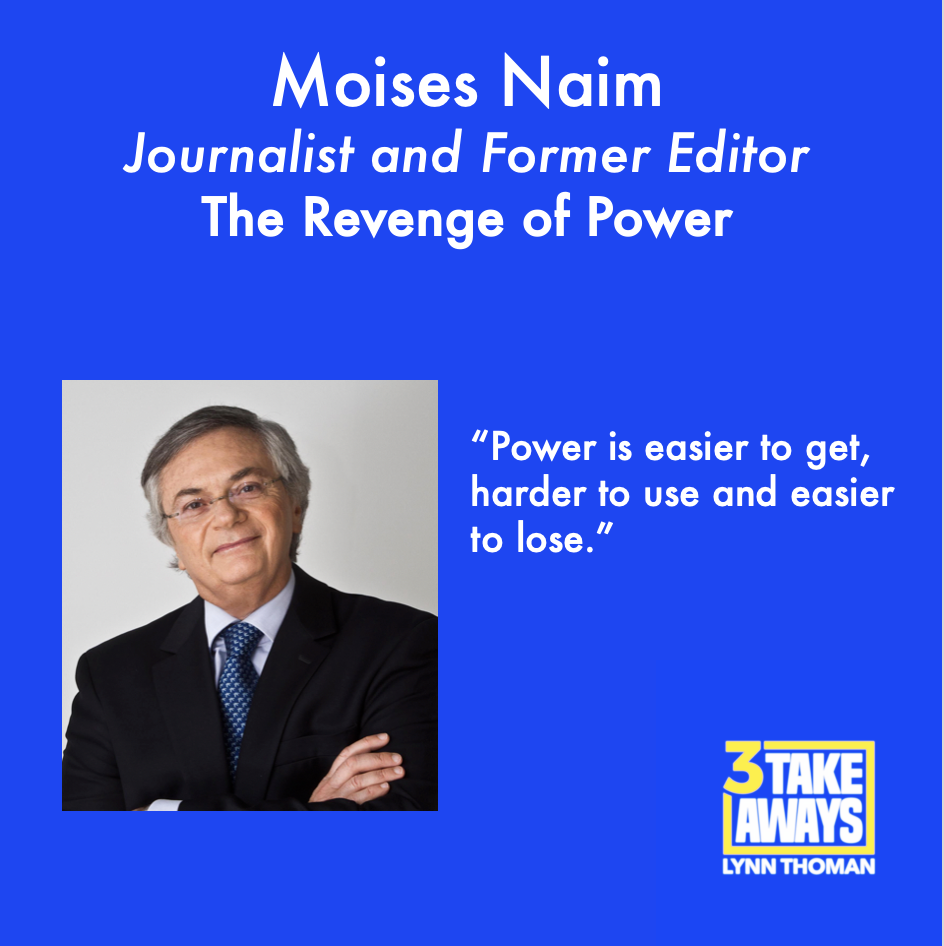
The Revenge of Power: How Power is Shifting in the 21st Century with Moises Naim
Power is easier to get, harder to use and easier to lose. Moises Naim explores how power is changing across all sectors of society. Power has shifted from country leaders to public squares, large companies to start-ups, and large armies to insurgents. Being in charge isn’t what it used to be! But at the same time, power is also concentrating in some sectors. Autocrats are reinventing politics and gaining power using 21st century tools - populism, polarization and post-truths - and undermining democracies around the world.
Moises Naim is a Venezuelan journalist and former editor-in-chief of Foreign Policy magazine. He was Minister of Trade and Industry for Venezuela, director of Venezuela’s Central Bank, and executive director of the World Bank. He is the author of The End of Power and The Revenge of Power.
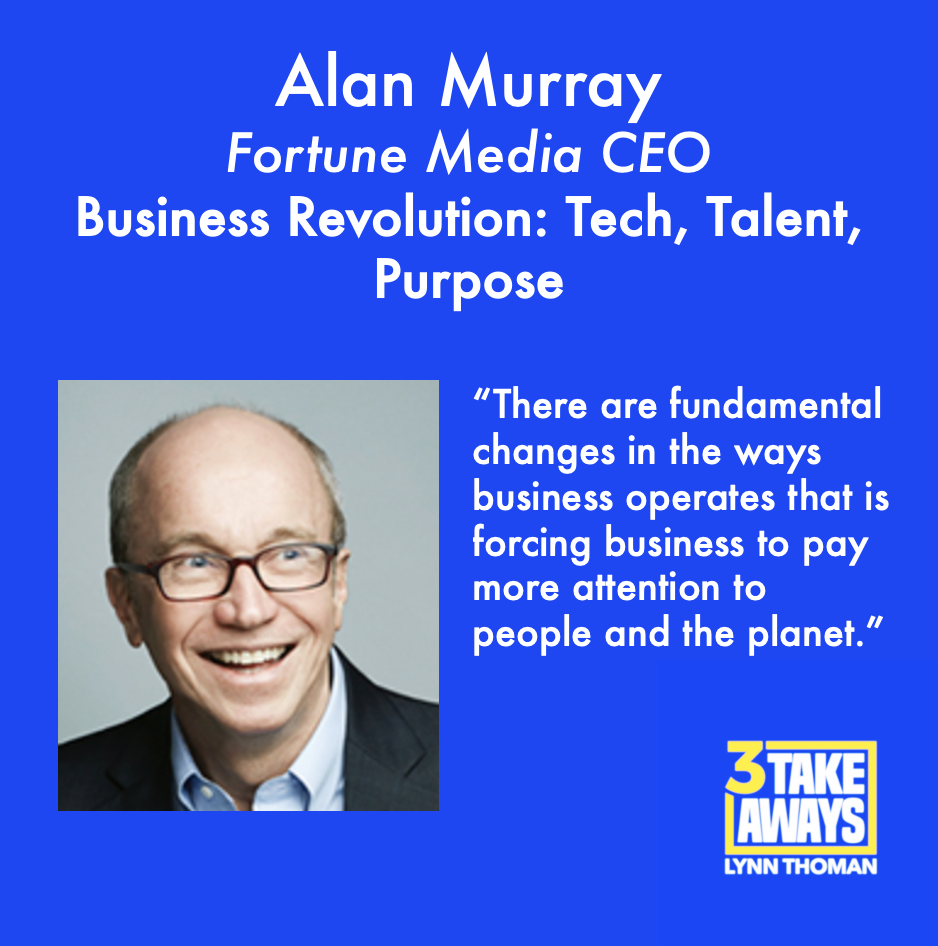
Business Revolution: Tech, Talent, Purpose with Fortune Media CEO Alan Murray
Fortune Media CEO Alan Murray shares the dramatic changes in business today due to the tech revolution, which is disrupting so many businesses, and the purpose revolution which is causing companies to re-think what they should be doing.
He believes that fundamental changes in the ways businesses operate today are forcing them to pay more attention to people and the planet.
It used to be that 80% of the value of the Fortune 500 came from physical assets but now over 85% of the value is intangible assets including intellectual property, software, brand value and the human emotional connection that comes from brand value. Since intangibles, which is where the value lies today, are things that are much more closely tied to people - it's human ingenuity that creates the intellectual property, it's human emotion that creates the brand value and the brand connection - business leaders are paying much more attention to people. Alan shares how that is changing the purpose of corporations and the role of the CEO today.
He also talks about how business has changed due to the pandemic, remote work, Black Lives Matter, rising inequality, global warming and the Ukraine Russia war.
Unless businesses are responsive to their employees, their customers and their communities, Alan believes they will lose. The biggest changes, he says, are yet to come.
His new book is Tomorrow’s Capitalist.